
Key Takeaways:
-
The robots are coming Whether they’re steel, software, or smart algorithms, robots are already reshaping white‑collar roles—and middle managers must begin preparing now for a future where machines handle analysis, prediction, and many decision‑making tasks.
-
Robots don’t eliminate the work—they change the nature of it. As machines take over routine, data‑driven tasks, humans will need to focus on what only people can do: coaching, empathizing, collaborating, and leading transformation.
-
The rise of automation in finance—such as investing bots and predictive analytics—puts typical middle‑manager responsibilities like asset oversight at risk, with analysts and asset managers projected to see significant job displacement.
-
To remain indispensable, managers must become fluent in digital tools and data—getting comfortable working alongside AI and bots while developing soft‑skill leadership that machines simply can’t replicate.
-
The opportunity isn’t doom: professionals who adapt by up‑skilling and embracing hybrid human‑AI workflows can stay ahead of change, turning disruption into a catalyst for career growth rather than obsolescence.
Yes, the Robots are coming, and they’re (probably) going to change how you manage people. Have you noticed that the buzz about artificial intelligence (AI) and automation has been picking up? I watch the tech space pretty compulsively and for years the dreamers would talk about how we’d all be downloading our souls into androids by 2050 and everyone else has been saying… no, that’s just a dream.
Then an AI named AlphaGo Zero happened. Without any programming on how to play the challenging game of GO, humans taught AlphaGo Zero the rules of the game and gave it the instruction to win. From knowing nothing to beating the world’s top players, AlphaGo invested a mere 40 days of practice, and along the way introduced some moves that upended centuries of human GO wisdom and strategy. Then ChatGPT. Then, everyone is advertising AI in their solution.
These breakthroughs in machine learning and large language models at the leading edge demonstrate the huge leaps automation is in the process of making, thanks primarily to advancements in big data and the processing and storage of digital assets. Whereas a few years ago I would have told you that the experts were saying such advancements wouldn’t mean major job changes for most office workers, today I’m telling you the experts are saying that almost every job will be affected in the next decade, if not sooner.
White Collar Jobs Are Feeling The Effects
Over the last twenty years, basic robotic technology has allowed tireless machines to continue and speed up the production of many things humans do, more slowly and with greater error. For the most part the impact has been felt in so-called “blue collar” manual and physical labor jobs (like manufacturing) more than in “white collar” knowledge work (like stock trading). In fact, research shows that job losses in the US have resulted more from such automation than from outsourcing and trade with lower-labor-cost nations like India and China.
Most white collar workers, both individual contributors and managers, took some comfort in this trend, feeling that their jobs were safe, but ChatGPT is beginning to change all that.
It turns out that the “robots” our researchers have been brewing in the last decade are not all made of steel and plastic. As knowledge work has become “work”, requiring productivity enhancement, our advances in software development AI–LLMs–have also made automating jobs that include tasks such as analysis, decision-making, problem-solving and processing more common. What this means is that what happened to factory workers a few decades ago is now happening on Wall Street and in many corporate offices.
Here’s a case in point: Wall Street Asset Managers. Asset managers are the people who mind your assets. They work for investment banks, wealth management companies and large corporations, i.e., anyone who has a lot of assets to manage. They pay attention to the value of the assets and what they’re needed for, and they make recommendations and decisions on when and how to buy, sell, lease, refurbish or destroy those same assets in order to achieve financial and other objectives. There’s a lot of information gathering, assimilation and analysis involved, as well as decision-making. While a company that leases tractor trailers has to physically go out and inspect the equipment, most of the relevant information for Wall Street asset managers is in digital form.
Maybe you can see where this is going. When the assets are digitally visible, smart software algorithms capable of mining big data to predict outcomes are faster and arguably more effective than human beings. They’re also much less expensive to deploy than humans who need offices and health benefits. As a result, in 2025, companies are starting to lay off employees in response to AI-generated productivity.
The begs an important question: will be out of a job? No! Historically, the job market has always shifted and changed to adjust to new technologies and market needs (see below).
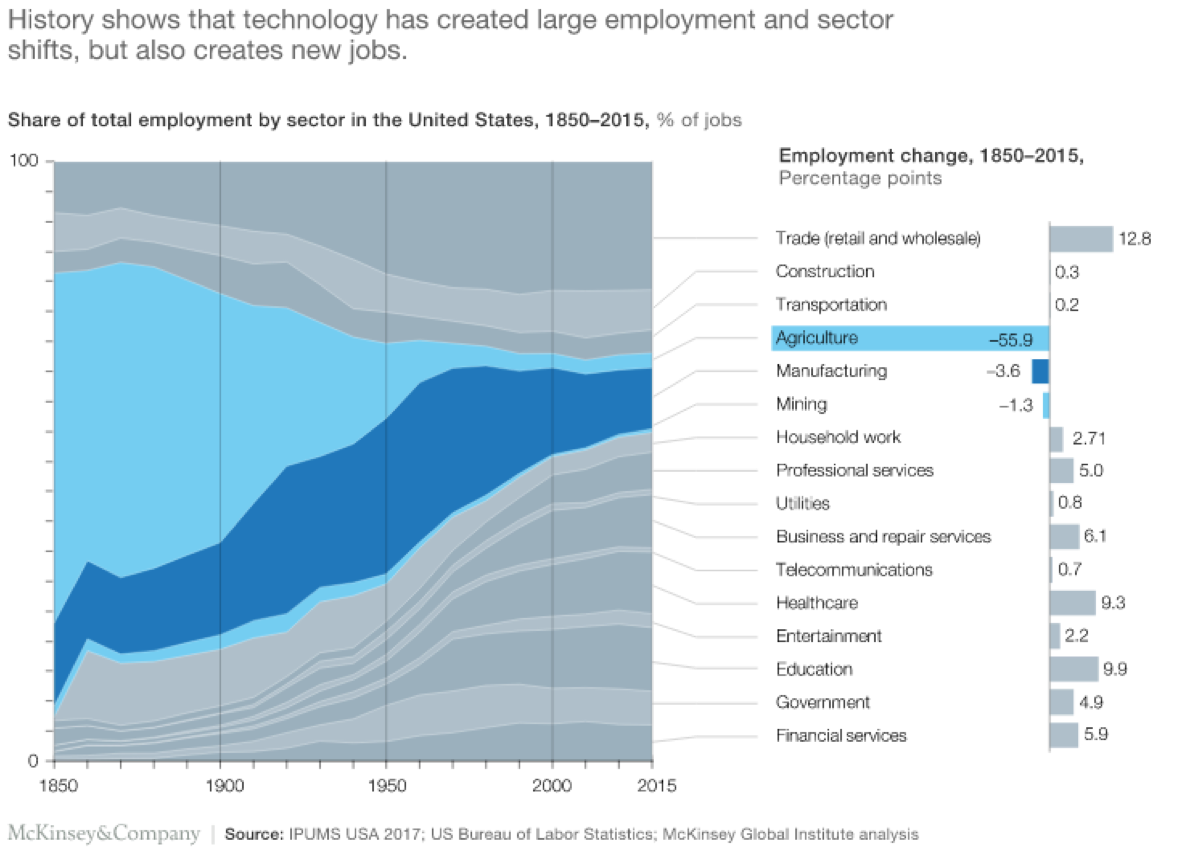
However, to stay ahead of the curve on these kinds of market shifts, you need to start thinking about how you produce results using both human and automated team members. It’s true that you’ll need to become more digitally savvy to manage the machines, but equally important will be your human skills. As the bots start to take over more and more analysis, prediction and data-based processes, the humans have to get better at doing what only humans can do. For leaders this means honing your soft skills to lead, manage and inspire the other humans you interact with on a regular basis.
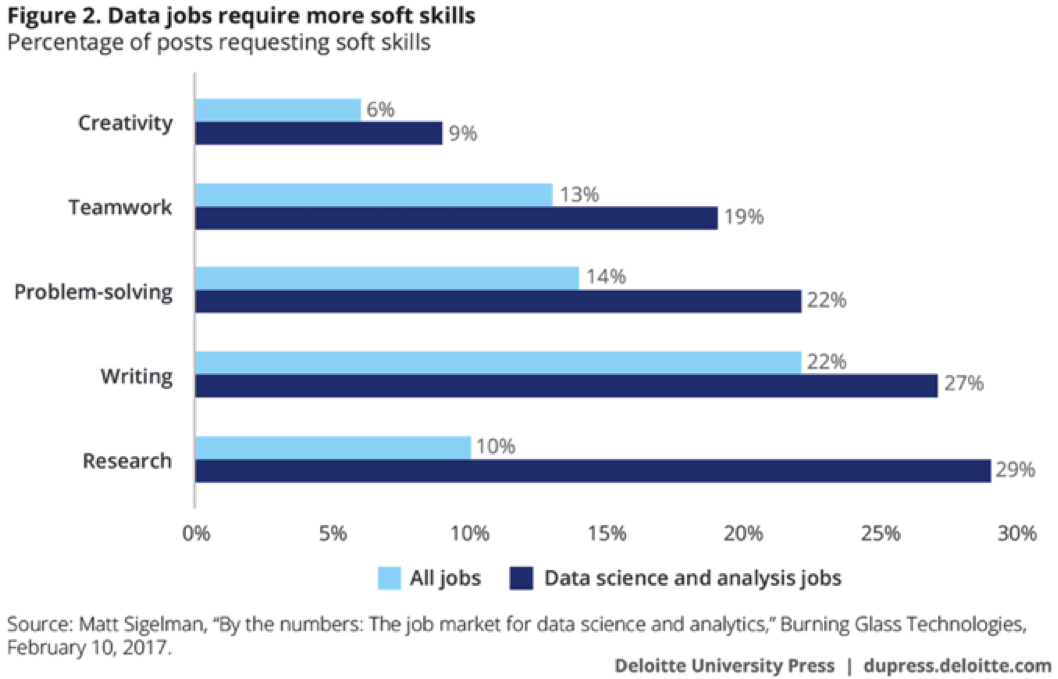
Technology Destroys Jobs, but Not Work
Just as many farm laborers moved to factory jobs 100 years ago, and line workers have retrained as robot techs more recently, many asset managers losing their jobs will move into other work that leverages their unique human assets more fully. For some the fact that the robots are coming will be traumatic, and for others it will be exciting.
To spare yourself of the trauma, regardless of what your job and industry is right now, you, too, need to begin paying attention to the trends that both automation and digital disruption are bringing to your industry and job category. Even people whose jobs aren’t lost often have new challenges dealing with new tools, customers and suppliers because of these trends. To remain competitive and employable you need to get on top of things. Get smart about where your job may be going, what it takes to stay current and invest in “upskilling” yourself to stay ahead of change instead of getting dragged along behind it.
The bottom line is that even when the analysts and economists tell you not to worry that people will be out of work, your future is about you, not “people”. Your responsibility is to do your job today and look out for your future tomorrow. I look forward to supporting you along the way.
Career Planning to Light Up Your Soul
eLearning Program
Not sure what your perfect job looks like? Struggle to network effectively?
Learn what lights up your soul at work, how to find meaning in your work and how to tell your story.