Feeling restless, sad, or stuck—even in a seemingly “good” life—is often a signal that you’ve drifted from your authentic self, not a sign that something external needs fixing.
Choosing comfort and fear-avoidance over fulfillment can slowly erode your sense of joy and purpose—it’s not your boss or your circumstances, it’s the quiet compromises you’ve made with yourself.
Discomfort isn’t the enemy—it’s often the doorway. When we’re most unsettled, we’re also most ready to question, grow, and make meaningful change.
The answers you’re looking for—about your work, your contribution, your passion—aren’t out there in a new job title; they’re in the honest questions you ask yourself when you slow down and really listen.
You don’t need to overhaul your life overnight. You just need the courage to acknowledge what’s calling you, what needs to be released, and what inside you is ready to be set free.
Many of the people I work with tell me they feel restless, knowing there is “something more” to do with their careers and their lives. They also feel a little sad and maybe resentful. Is this you? As you look back on this year, do you feel grateful for what has occurred or relief that it is finally over?
Actually, you can feel unfulfilled when life is good and when it isn’t. You can be busy and successful but sense emptiness inside. Or you can be on the other end where you feel nothing is how you wished it could be and that others are at a better place than you.
The restlessness, shallowness, sadness and resentment can’t be blamed on your boss, friends or family. You feel these emotions because your choices have left you disconnected with yourself. Making life choices based on what eases your fears instead of what fulfills you is an act of self-denial. You miss your passionate, joyful, grateful self.
The good news is that these feelings can help you create a new future. M. Scott Peck said in his book, The Road Less Traveled, “The truth is that our finest moments are most likely to occur when we are feeling deeply uncomfortable, unhappy, or unfulfilled. For it is only in such moments, propelled by our discomfort, that we are likely to step out of our ruts and start searching for different ways or truer answers.”
You will find your answers and fulfillment inside, not outside in a new job or career.Although your exploration might lead you to a new path, it’s self-examination that leads to peace of mind.
In his book, Right Risk, Bill Treasurer(link is external) asks, “Are you a Whatever Person?” Do you just accept what is not working for you because you don’t think you have any control over your life? To overcome this acquiescence, take the time to answer tough questions such as these:
Are you selling out in some area of your life?
Have the compromises you made to live comfortably drained your passion for working? What did you once enjoy doing but the joy has disappeared?
What about your work represents what you stand for?
When you use your greatest talents and gifts, what are your accomplishments? What impact do you make?
What is the highest contribution you can make for your organization, community or the world? What do you dare to dream of doing? What is calling you? To step into your profound potential, what must you leave behind?
Reflect on your answers. Then be quiet, feel your breath in your belly and ask yourself, “What inside me wants to be free?”
Answer these questions as honestly as you can. You don’t have to drastically change your life now. You just need to be honest about how you want to give of yourself in this lifetime.
Once you begin to grasp who you really are and what you truly desire, look for ways to shift your daily work to help you realize your highest potential. With this intention, it is likely you will engender the people and circumstances that will help you achieve your goals. Mythologist and writer Joseph Campbell said, “A thousand unseen hands,” will come to your aid.
Take time to re-acquaint yourself with you. Then you might vision what you want for your future so you can align your daily actions, experiences and learning with this focus in mind. This will be your preparation for taking the bigger leap when you are ready.
Make this coming year one of self-discovery not of self-suppression.
When you listen to yourself your life feels more substantial and fulfilling. When you come to know yourself, the longing and emptiness fade away. When you take the pains to live the life that showcases your highest potential, you embody a state of dignity and grace.
Succeed on your own terms.
Tap your most Authentic Feminine Leadership Style.
Work-life “balance” is outdated—embrace the blend. Life isn’t a neat 50/50 split; it’s a constantly shifting mix of priorities, and it’s okay if the ratios change day to day (or hour to hour).
Guilt doesn’t serve you—cut it out. Women often carry a heavy load of guilt about letting work into family time, but letting go of rigid expectations can ease the pressure and create a more realistic, humane rhythm.
Blending isn’t weakness—it’s wisdom. Integrating work and home life isn’t about slacking—it’s about being adaptable and making room for what matters most in both worlds.
You don’t need equal parts to feel whole. Just like colors mix in different shades, your life blend is uniquely yours. There’s no single formula—and that’s a strength, not a flaw.
Redefining “normal” helps us all thrive. The sooner we stop trying to divide life into strict categories, the sooner we’ll find peace in our personal choices and teach our children to do the same.
We’re big fans of work-life blending here at InPowerWomen.com because the concept of work-life balance assumes a steady state that few of us actually experience. Kathryn provides much needed perspective to help you give yourself a “guilt-ectomy” about blending what’s most important in your life and work. – InPower Editors
It’s no secret that I’m a proponent of making work work. As you’ll see in my “Look Before You Leap” webinar, I advise women to think carefully about both short-term emotions and long-term needs before they leave the workforce. And I’m always looking for wisdom from other experts who can help women solve the work/don’t work dilemma.
I’ve already given up that balance word because it is just not possible, and as I’ve said many times, seesaws are always uneven. I like the idea of fit (which is why my web site tagline is “Find the Work that Fits Your Life”). And I like the idea of a work-life “blend”, too.
In blending you have a little of this and a little of that or a lot of one or the other. It doesn’t necessarily have to be equal parts of blue and yellow to make green. You can have many shades of green, and in the same way there is no single formula for the shade of work you want in your life.
The article points out the obvious: our professional lives bleed into our personal lives. But then there is a great suggestion: “maybe we need to accept the fact that the sharp demarcation between work and home is a thing of the past, and that the new normal is a life that integrates home and work more seamlessly”.
Terrific concept, but to do this many women would need a guilt-ectomy. Women feel great guilt when they have to take a call in the middle of dinner or work on a Saturday afternoon. I know that many men are different: my husband did not walk around with a guilt pit in his stomach when he spent an entire beach vacation closing a deal in an air-conditioned room, when he has had three business dinners in a row or when he has taken calls on the sidelines of school field hockey games.
He doesn’t feel guilty and I don’t make him feel guilty because I understand that business cannot always be perfectly timed. Though I understand these truths about business, I hold myself to an entirely different standard—thinking that my daughters will say (on a psychiatrist couch at some later date) that I was glued to my phone and computer instead of tending, relentlessly, to their every need.
The Forbes article made me think about how, as our children get older, we encourage them to have lives outside of our families. An older nanny we once had told me that from the moment the umbilical cord is cut, we start to prepare our children for independence. We want our children to have their own lives—to have interests and activities that they find and pursue on their own—yet we feel guilty for the work lives we lead out of those same homes.
The draw to leave work entirely would be less intense if we could be less rigid about what is “supposed to be” work or non-work time. With great regularity there are home and family issues that will come up at the office, and work issues that will come up at home. That’s okay, because we’ve got to do our best to blend two important lives—the one inside and the one outside of our homes. It’s a good life lesson that accommodates the independence we need as children and adults. Children go to school and play at home. We go to work and play with them at home. Often work time blends into play time—whether it’s homework from school or a call from your boss.
Take charge of your career development to get the job that supports your work and your life. Check out the tools and resources in the InPower Coaching Career Center.
Worklife Reset for an Energized, Authentic Personal Brand
Workbook & Toolkit
Feeling like you need to hit the reset button on your job, career or business?
This uplifting 8-step process will help you find meaning, motivation and momentum in your career and work
The workplace needs to evolve to support women: Traditional workplace structures, designed with men in mind, often fail to accommodate the needs of women in the workplace, hindering their advancement.
Women bring unique strengths to leadership: Qualities like empathy, communication skills, and inclusiveness, traditionally seen as “feminine,” are valuable assets in the workplace.
Women’s needs are often overlooked: From physical workspace design to expectations around work hours, women’s needs are frequently treated as exceptions rather than the norm and treating women’s bodies as “broken men.”
Systemic change is crucial for gender equality. This includes advocating for policies like flexible work arrangements and parental leave and increasing women’s representation in leadership roles.
Empowering all women in the workplace starts with self-advocacy: Women need to recognize their own needs and strengths, and advocate for themselves in the workplace, acting as role models and helping organizations understand their needs more clearly.
The Reality of Gender Bias in the Workplace
It’s no secret that most workplaces aren’t designed with women in mind. The standard protocols and policies, from physical workspace design (and temperature!) to the expected work hours and communication styles, are predominantly designed to accommodate traditional male norms. The historical reality–that our modern understanding of “women in the workplace” weren’t really a thing until about fifty years ago–has led to work environments where women’s physical, logistical, and emotional realities are not just overlooked but are often seen as inconvenient or exceptional.
Is this a gender equality issue? I didn’t think it was until recently. Now I do.
In reflecting on personal experiences and broader societal norms, it’s become clear to me that working women have normal, predictable needs that are frequently treated as special requests. This treatment stems from a deep-seated view of these needs as deviations from the “(male) norm.” The result is that many policies and cultural expectations intended to support women end up acting as accommodations that treat women as “broken men.”
For instance, considerations for women in the workplace, such as maternity leave, the need for more flexible working hours, and the requirement for a private space to pump breast milk, are viewed through a lens of exception rather than standard practice. When significantly fewer than half the labor force had those needs, this might have been excusable. Still, since World War II, women’s representation in the labor force has been becoming more gender-balanced. We’re now at the point where we have to admit that a key to women’s advancement, career progression, and organizational effectiveness requires a new model of supporting employees of all genders and gender expressions.
The traditional “accommodations” perspective not only marginalizes women in the workplace but also fosters a workplace culture where women, who still bear the greater burden of balancing work with family obligations, may feel the need to conform to standards that do not fit their reality, often at the expense of their health and well-being. Recognizing and actively addressing these biases is crucial. It’s about reshaping our understanding of what the ‘norm’ should be in our workplaces to foster an environment that truly supports all its members.
Understanding The Unique Strengths of Women in the Workplace
The narrative that differences between genders, and specifically the differences presented by both women’s bodies and the need for different work arrangements, are weaknesses is outdated and harmful. Women in the workplace bring a host of unique strengths to leadership that are not only valuable but necessary for a well-rounded team. These include but are not limited to, exceptional communication skills, empathy, inclusiveness, efficient productivity, and a knack for building strong relationships. These qualities are instrumental in creating a work environment that values collaboration and mutual respect.
For example, women’s tendency as compared to men, to excel in collaborative settings can lead to more democratic and inclusive team dynamics, where ideas are freely shared and everyone feels valued. This can result in more innovative and effective problem-solving. Moreover, the empathetic leadership style often associated with women can lead to higher employee satisfaction and retention, as team members feel more supported and understood.
However, women’s advantages in leadership do not stop with these softer skills. Research has shown that thirteen of the eighteen most prized leadership styles tend to be viewed as more feminine than masculine. Women are generally rated as more creative leaders as well, which is highly correlated with positive business outcomes. Studies have also shown that gender diversity and inclusive cultures–welcoming of diverse styles and identities that include both women’s and men’s leadership styles–produce a wide variety of organizational and business benefits.
It’s essential to shift the focus from viewing these differences as liabilities to recognizing them as the assets they truly are. By doing so, we not only enhance the dynamics within our teams but also set the stage for more meaningful contributions and satisfaction at work–for women and men alike.
Navigating Workplace Dynamics As A Woman In A Body
When we want the leadership strengths that women in the workplace bring with their minds and hearts, we have to be mindful that our minds and hearts come in a package that includes our whole bodies.
I can tell you from personal experience that, as a woman, navigating a workplace and work culture designed for men is not easy. Everyone knows that sexual harassment and discrimination, which is not a problem only for young women, is old ground, but an ongoing factor that too many women still encounter. But what’s less well understood are the ways that our minds, hearts, and bodies offer greater benefits to our employers when we’re not draining our energy into trying to adapt to a male standard and culture that is not supportive. Here are some examples that are not uncommon in my experience as an executive coach supporting female leaders:
Mind: A Director who, when asked to fix a problem in another department run by a man, delivered not one solution but two realistic scenarios with analysis to back them up and was chastised for embarrassing her male peer with her attention to detail.
Heart: A Vice President who is empathetic and spends time and energy helping employees adapt to change is often called “too soft” and not given credit, despite delivering business results and keeping employees engaged, which cuts down on employee turnover.
Body: An individual contributor suffering from debilitating endometriosis, which flared up monthly with her period, whose request for two days a month to be flexibly scheduled at her own convenience was turned down as “unprecedented.”
Mind, Heart and Body: Several female Vice Presidents held back from C-Suite positions an average of three years longer than their male colleagues for “seaoning” despite consistently delivering higher measurable performance.
In each of these cases, the individual asserting her needs and boundaries had to be highly artful in her request to even have a chance at success, effort which turned out to be wasted. It’s not surprising to most women that the effort to manage these kinds of situations in ways that are “culturally appropriate” feels burdensome and exhausting. It also feels especially tiring when they experience a double standard that their male peers are seldom subjected to. Every worker, woman or man, can use situations like these to practice and develop clearer communication styles and set precedents that advocate for their needs while also educating others on why these are beneficial for the entire workforce. But the workplace has to be open to their requests or their unsuccessful attempts become a drain on their productivity.
Building a supportive network can help. Such a professional network can include allies–female and male–within the organization who understand and support gender diversity. It’s equally important for women to engage with other female leaders to share experiences, receive reinforcement, and get new perspectives. One thing that’s clear to me, however, is that the subject of women’s physical needs is often left unexplored in these women’s networks as well. I believe, based on my own experience, this has a lot to do with the extent to which women have internalized the biases against configuring the workplace to optimize women’s performance in the way that it does men’s performance, including especially honoring their hormonal cycles.
It’s not all about supporting women. Advocating for systemic changes that benefit all workers can often start with initiatives led by women. These can include:
more flexible work policies that help dads and moms both
working remotely that help everyone with external obligations
better health and wellness programs for all
more inclusive hiring practices that benefit minority races and the differently abled to mitigate persistent underrepresentation and achieve true parity
All these efforts can lead to significant improvements in the workplace for everyone.
Leveraging Resources for Career Advancement
Knowing where to look for resources and support can make a significant difference for women in leadership roles. Websites like InPower Women offer a plethora of resources that cater specifically to women, providing tools, insights, and support systems designed to help navigate the often complex landscape of leadership.
Continuous learning and personal development play a crucial role in staying relevant and prepared in any career field. For women, this might mean taking on leadership training specifically designed to address the unique challenges faced by women in leadership positions. Additionally, seeking out mentorship, coaching and sponsorship opportunities can provide guidance, open doors, and offer the kind of advocacy needed to advance in one’s career.
Resources alone aren’t necessarily enough to help women in the workplace overcome the systemic issues that accommodate them as “broken men.” The most important thing for them to cultivate is a mindset that views workplace challenges as opportunities for authentic personal growth. By seeking to go into their stretch zone and develop their own authentic feminine leadership style, women not only prepare themselves for leadership roles but ensure they become their best selves in the process.
Creating Inclusive Work Environments
Creating a workplace that supports the needs of whole people–with bodies, minds and hearts to contribute to workplace success–is a high goal, but a worthy one. For an organization to genuinely value diversity and inclusivity, they have to think about creating a workplace that standardizes on human needs, not just the needs of one gender, race, or other group of workers. To develop policies and practices that will ensure all workers feel supported, they have to be sure they’re aware of workers’ true needs, and be sure they’ve collected information beyond the male standard and cleared their minds of the biases we’ve all internalized about the male-standard “norm.” Flexible work arrangements to equitable parental leave policies are just the beginning.
One effective approach is to establish employee resource groups (ERGs) for women, which provide a platform for support and advocacy within the company. These groups can also serve as a crucial feedback mechanism for management to understand and address the specific challenges faced by their female employees. However, it’s important that these groups feel empowered (and funded) to bring true benefits to their members. Too many ERGs experience a notable lack of true support from their companies, such as leadership training, that would result in career advancement for their members.
That said, success stories abound in companies that have taken proactive steps toward inclusivity. For instance, some companies have implemented mentorship programs specifically targeting women in the workplace, helping them to build confidence and advance their careers within the company. Coaching support, both individual and group, can also be a game-changer for women targeting roles in leadership, who need help advocating for their needs and understanding their own authentic strategies for getting ahead in work cultures optimized for men.
Overcoming Common Challenges Faced by Women Leaders
Women leaders often face a range of challenges, from imposter syndrome to balancing professional and personal responsibilities. Even though “worklife balance” is outdated thinking (true balance being impossible), women working in corporate America especially continue to find that the important role they play in their personal lives often competes for their personal resources with the requirements to show up at work the way is expected of the average worker, especially leaders. Often, this is because the way they’re expected to show up is based on male standards, where less is expected of them at home, including the needs of their children.
Because more men also want to be more present for their families and non-work lives, the solution is not for organizations to be less accommodating to women’s needs but more accommodating to the human needs of all their workers, whether they have children or not. Organizations can support all their employees by offering flexible working conditions and being open to non-traditional work hours and remote working.
Lastly, the lack of women’s representation in leadership, from the broken rung of middle management up, remains a significant barrier. This can be addressed by advocating for more women in senior leadership roles and by ensuring that recruitment and promotion policies are fair, transparent, and applied in ways that achieve gender equality in the selection process. Encouraging women to take on leadership roles and providing the necessary support to succeed is crucial for changing the status quo.
The Path Forward: Advocating for Systemic Change Through Personal Experience
For true progress to be made, systemic changes are necessary both within organizations and across industries. But we all know that calls for systemic change often land on deaf ears. Systemic change is hard, and it’s a high bar that is only accomplished through ongoing, incremental changes that add up to big things over time.
Change involves pushing for policies that benefit many women and all employees, such as better parental leave, flexible working hours, and comprehensive health benefits. When organizations commit to these changes, they not only support their female employees but also create a more attractive workplace for everyone, which can lead to increased productivity and satisfaction.
But for these kinds of changes to help real women–who bring their minds, hearts, and bodies to work–these women need to be very clear about what kinds of changes would genuinely support them. In many workplace cultures, this means women must be brave and speak up more about what their bodies need, and the value their minds and hearts bring to the table. This bravery is not always rewarded, at least not at first, but persistence is key, and when fewer women are willing to speak, most women and their needs as whole people go unseen.
Women in leadership positions have the unique opportunity to pave the way for future generations. By taking on these roles and advocating for themselves, they create an environment where systemic changes become possible. They can help ensure that the next generation of women enters a workplace that is more inclusive and equitable.
Empowering Women in the Workplace to Shape the Future of Work
Empowering other women starts by empowering ourselves. As women continue recognizing and valuing our own unique needs and strengths in the workplace–not just a matter of fairness or compliance but as a strategic imperative–more women will find their way into senior leadership because of the support they receive along the way. Advocating for our own needs helps create inclusive environments and systemic change. Empowering ourselves is the most important of numerous steps that can be taken to support and empower women at work.
Continued conversation and action are essential. We must keep pushing for changes that not only address the immediate challenges but also pave the way for lasting equity and inclusion. Let’s work together—women and allies alike—to break down barriers and redefine standards, creating a future where everyone, regardless of gender expression, can thrive.
I encourage every reader to reflect on how they can contribute to this change, articulating their own needs more clearly, advocating for policies in their own workplaces, supporting their colleagues, and personally committing to professional development and leadership. Together, we can shape a future for women in the workplace that truly values and benefits from diversity and inclusivity.
InPower Women’s Mastermind
We don’t Mastermind your business. We Mastermind YOU!
As an executive–or an executive-wannabe–enhancing your leadership effectiveness is pivotal to career success. After over a decade of executive coaching, I can confidently say that the right coach for executives can be the catalyst you need. Through personally tailored strategies, a compatible executive coach can offer transformative insights that refine your decision-making, communication, management, and mentorship skills. Effective coaching benefits you, helping you reshape your approach to leadership and your personal brand, and it also delivers results for your organization’s performance. But AI is coming! What does this mean for executive coaching? Can a bot help you?
Key Takeaways
Executive coaching is a powerful partnership that boosts performance and fosters personal development, helping leaders confidently navigate the complexities of corporate leadership.
Investing in executive coaching can yield substantial benefits for both individuals and organizations, including enhanced leadership skills, better decision-making, and a stronger alignment with business strategies.
The effectiveness of an executive coaching program rests on its tailored and personalized approach, with clear goal-setting, regular progress assessments, and actionable feedback that culminates in measurable professional growth.
Artificial Intelligence (AI) will enhance executive coaching but will not replace it.
Exploring the Role of an Executive Coach
In the ever-changing world of business, an executive coach is your ally in navigating a complex web of leadership, management, persona brand, office politics, and career challenges that come along with greater responsibility and visibility. Executive coaching is more than just a service; it’s a partnership designed to enhance your performance, provide critical support during uncertainty, and guide you through the often-turbulent waters of organizational leadership.
Good coaches have an experiential basis for understanding your challenges and are able to “meet you where you are.” They leverage their own professional, personal, and leadership experiences to offer you fresh perspectives and strategic insights you can act on. Regardless of your position on the organizational chart, the benefits of executive coaching can be profound, fostering improved management skills and unlocking the potential within you to lead with greater impact and confidence.
The Core Functions of an Executive Coach
At the heart of their practice, executive coaches strive to:
Inspire and support you as you journey toward reaching your higher leadership potential
Have a foundation of experience and knowledge in leadership development
Guide you to greater self-awareness, helping you leverage your strengths, shore up your weaknesses, and achieve your higher purpose
Give you assignments and challenges to stretch you and help you integrate new tools, mindsets, and frameworks into your management style
This commitment to your growth is mirrored in the coach’s own dedication to continuous professional development. While certifications such as those endorsed by the International Coaching Federation master certified coach programs may help you determine their qualifications, their ability to relate to you, their experience coaching, and their client testimonials will tell you much more about whether and how they can help you.
The cornerstone of any successful executive coaching engagement is the establishment of a trust-based coaching relationship. From the initial meeting, the coach and executive begin a journey of mutual understanding, crucial for forging a connection that will anchor the entire coaching process.
In this safe and confidential environment, you are encouraged to open up and be honest with yourself and your coach, setting the stage for a partnership focused on clarity and purpose. By gaining an understanding of your history and work environment, your coach will tailor their approach to effectively support your unique leadership journey.
There are two types of coaching engagements: ongoing and episodic. In an ongoing engagement, you meet regularly, usually biweekly or monthly, and your coach helps you adjust and build your leadership style through the flow of your work. In more episodic engagements, you use your coach as a periodic catalyst to move past stuck points, find inspiration when your motivation is flagging and problem-solve acute circumstances where you need an outside perspective.
Enhancing Leadership Skills Through Coaching
Coaching goes beyond surface-level advice; it cultivates strategic management abilities, enhanced communication, and other essential leadership skills that can reshape not only your approach to challenges but also influence the broader company culture. Executive coaches can also help you refine your own coaching skills, to help you develop and support your employees.
Emotional intelligence is a soft skill that is particularly honed through coaching, with an emphasis on building strong interpersonal intelligence and skills at managing group dynamics.
Many executive coaches use 360 assessment tools, such as the Leadership Circle Profile 360 assessment to give you pointed and actionable insights into specific areas to improve your leadership effectiveness.
Here’s an example of the kind of coaching insight you might expect from a good executive coach:
POST VIDEO: https://youtu.be/Vc_yCt6Cnac
The Advantages of Executive Coaching Services
The value of executive coaching services extends beyond the individual, aligning with an organization’s business strategy and positively influencing corporate culture—a key ingredient for business success. As an executive, you will experience significant personal growth from coaching, gaining improved self-regulation, enhanced decision-making confidence, greater skill at delivering business results, and a heightened sense of accountability to your goals and vision.
Studies have highlighted that executive coaching works, resulting in tangible business benefits–as much as a 788% ROI–through increased productivity, employee satisfaction, and impactful business outcomes.
Personal Development and Career Transition
Personal development is at the core of the coaching experience. Executives report a boost in self-awareness, emotional intelligence, focus, and motivation, all of which contribute to a more powerful personal brand and skillset. Coaching supports you in setting and achieving goals that not only reflect your professional aspirations but also resonate with your personal values and purpose, ensuring that skill development translates into tangible benefits in all areas of your life.
Many new managers and executives struggle in the initial phase of their roles, and for these people, coaching can be a lifeline. Many people leading at a new level are unprepared for the challenges of leading at a new level, needing to get out of the weeds and work more effectively at the treetops. They experience various feelings related to the Imposter Syndrome. The support of an experienced executive coach, can help them focus on new levels of strategic thinking, communications challenges and stakeholder management, preparing them for the challenges ahead and significantly accelerating their adaptation to new leadership positions. For those in transition, career coaching offers personalized guidance, strategic planning, and enhanced job search strategies, ultimately increasing the likelihood of success in new ventures.
Driving Organizational Change with Executive Coaching
In times of organizational upheaval, coaching becomes an invaluable resource for leaders. It provides the focus and development needed to confidently navigate uncertainty and drive essential changes within the organization. By empowering you to embrace new strategies and behaviors, especially with respect to managing resistance to change, coaching plays a pivotal role in the successful implementation of organizational change initiatives.
Furthermore, as change introduces strains on both leaders and their teams, coaching offers strategies to alleviate and manage these pressures, increasing the likelihood of successful outcomes during transformative periods.
The Impact of Executive Leadership Coaching on Team Dynamics
Leadership does not exist in a vacuum, and the impact of executive coaching on team dynamics is profound. By shaping workplace and leadership culture, coaching can influence the values and behaviors that define an organization. This also extends to team performance, with coaching focusing on the collective improvement of the entire leadership team in pursuit of unified objectives.
When coaches work alongside senior leaders and their teams, they provide tailored advice that supports the team’s effectiveness and helps individual team members contribute more meaningfully to the group’s efforts through team coaching.
Cultivating Company Culture
The culture within a company is a reflection of its leadership. Executive coaching enables leaders at all levels to:
Evolve their mindsets
Reinforce behaviors that foster a positive and productive environment
Gain deeper insights into their leadership traits
Obtain fresh perspectives on their influence within the company
Leadership approaches that prioritize teamwork and transparent communication, developed through coaching, are key to cultivating a company culture that inspires and motivates employees. Furthermore, the self-awareness and communication skills enhanced by coaching enable leaders to effectively mentor others within the organization, thereby perpetuating a culture of growth and development.
Empowering Teams for Greater Success
A team’s success is significantly bolstered by executive coaching, with some studies showing up to a 50% increase in team performance. Coaching supports teams in aligning shared goals and addressing the relational dynamics that can either hinder or enhance team cohesion and effectiveness.
By fostering a culture of collaboration and open communication, coaching helps teams to operate more synergistically, leading to improved bottom-line results and better decision-making across the board.
Key Components of an Effective Executive Coaching Program
A truly effective executive coaching program must be constructed with precision, taking into account the individual needs, goals, and leadership style of the executive. Such a program includes setting measurable goals, monitoring progress, and providing actionable feedback throughout the engagement.
Typically spanning 6 to 12 coaching sessions, spaced three to four weeks apart, these programs focus on the real-world application of new skills and the reflection upon these experiences as a critical learning component. Onboarding coaching, in particular, emphasizes the development of critical skills and the achievement of early results to build credibility and set a strong foundation for continued professional growth.
Setting Goals and Expectations
Clear goals and objectives are the compass points guiding the executive coaching program, providing clarity and focus for both the coach and executive. These goals are often set with the involvement of the leader’s supervisor and may include feedback from a 360-degree peer review, ensuring a comprehensive understanding of the leader’s impact and areas for development.
Individual executives are most successful when they pursue goals that are personally motivating and aligned with their deeper aspirations. In the organizational context, effective leaders learn how to manage the development, evolution, and tracking of team and group goals using tools such as OKRs.
Monitoring Progress and Achieving Goals Faster
The journey of executive development is one of continuous assessment and recalibration. Regular evaluations and strategic adjustments help maintain focus and motivation, creating a momentum that accelerates the achievement of set goals. Utilizing tools like 360-degree feedback and pulse checks on leader performance, executives gain a detailed picture of their performance from various perspectives, enabling them to fine-tune their strategies and behaviors for greater success.
Receiving and Implementing Feedback
Unbiased feedback is a cornerstone of personal and professional growth. Working with a coach who provides this type of feedback encourages executives to critically evaluate their options and make better-informed decisions. Assessments and coaching tools are integral to this process, helping executives to identify their strengths and areas for development, thereby enabling a more focused and effective growth path.
Selecting the Right Coach: What to Consider
Choosing the right coach is a very personal decision, requiring careful consideration of the coach’s experience, credentials, and proven outcomes. Client testimonials and case studies can offer insights into a coach’s ability to facilitate success and should be carefully reviewed.
Understanding the coach’s methodology and their perspective on executive coaching is essential to find a match that aligns with your expectations and fosters a successful coaching engagement. Before you choose a coach, spend at least thirty minutes interviewing them about their approach to your challenges and their past experience and successes.
Aligning with Leadership Style and Needs
As an executive, your coaching needs are as unique as your leadership style. It’s crucial to partner with a coach who can resonate with your personal approach and effectively address your specific challenges and goals. A coach’s ability to listen and engage, along with their perspective on ethics and confidentiality, are significant factors to consider, ensuring a secure and productive coaching relationship.
Can I use ChatGPT as my coach?
Believe it or not, Artificial Intelligence (AI) can be an effective tool for engaging in some coach-level thinking about how to enhance your professional development. The best AI systems for any discipline are trained on the area of expertise they are designed to support, so it’s best to use a coach-trained AI system. Coach-trained AI systems can provide thoughtful responses to questions you may want to ask a coach.
AI systems know information, however, they don’t have personal experience, judgment, or intuition. They can’t help you find the particular lens on our challenges that appeal to your values and motivations as meaningfully as a human coach can do. These are things that executives and leaders find particularly helpful from human coaches. A good human coach will help leaders find the shortcut to the knowledge or insight they need to be successful in very specific situations. When you’re looking for a coach, consider finding one who has an AI assistant to help you in between sessions, not just a knowledge-retrieval device.
Frequently Asked Questions
What makes executive coaching effective for leaders at all levels?
Executive coaching is effective for leaders at all levels because it is tailored to meet their unique needs, unlocking potential, enhancing performance, and guiding through challenges with expert support. So, it helps leaders reach their full potential and navigate their role effectively.
How does executive coaching contribute to personal development?
Executive coaching contributes to personal development by enhancing self-awareness, emotional intelligence, motivation, and overall skillset, leading to a more robust personal brand (Date not available).
Can executive coaching impact an organization’s culture?
Absolutely! Executive coaching can have a significant impact on an organization’s culture by shaping values, beliefs, and behaviors, and by fostering transparent communication and teamwork. It’s a powerful tool for driving positive change within the company.
What are the key components of an effective executive coaching program?
The key components of an effective executive coaching program are tailored goals, regular progress evaluations, actionable feedback, and real-world application of new skills with ongoing accountability. These components ensure a successful and impactful coaching experience.
How do I choose the right executive coach for me?
Choose an executive coach by evaluating their experience, credentials, outcomes, and methodology while ensuring alignment with your leadership style, personal challenges, and goals for a successful coaching relationship.
FREE EBOOK
Coaching Tips: How to Avoid the Most Common Career Mistakes
I am a student of goal-setting success. Early in my career I began to notice that I was more likely to meet some of my goals than others. Being curious, I began to experiment and reflect on which goals led to fairly effortless success and which ones might predictably end in frustration.
My most reliable strategies for goal-setting success found their way into InPower Intentions, but along the way it became clear to me that there were psychological elements at work behind successful goals, and once I learned to use them I started to hack my own productivity hacks for greater success.
Why goals work–or don’t
Our brains are meaning-making machines. All day, every day, they sort, prioritize, and capture some information, organizing it into constellations of meaning and memory while letting other data move on to be forgotten, at least consciously.
Goals that take advantage of this natural, effortless, and powerful ability to create meaning tend to have a greater impact on our success. They do this by helping us organize a vision of our future that draws us forward with purpose and focus.
With a goal pulling us through the chaos of our days, we more easily navigate the overwhelm to identify information and actions that will lead to success and let the rest go without giving it too much of our precious energy.
A goal’s ability to give us a vision of our future, one that helps us navigate the present, is pretty straightforward. However, that’s just the mechanics, not why it’s successful.
The secret to success–letting go of being successful
The best goals pull us forward into the future so we can see more clearly what we couldn’t see before about how to succeed. With these new insights and perspectives, innovation is more likely.
From that future vantage point, we must be willing to redefine our visions of success—our goals—in order to be successful in the world as it is, instead of how we envisioned it in the past when we set our goals in the first place.
We must let go of our older vision of success in order to achieve what can be achieved in our new present. And a willingness to let go of what no longer serves us is a good habit to cultivate for all kinds of reasons.
Clients sometimes struggle with this concept for good reason. After all, tenacity and determination are critical to achieving difficult things. So I explain it this way, staying committed and relentless in pursuing the highest version of the outcome is important. Getting stuck to each step along the way, or to a single way the objective can be achieved, will limit you, frustrate you, and–ultimately–cause so much stress and frustration you’ll sacrifice health and relationships if you’re not careful. The art of success lies in the space between understanding and doggedly pursuing the highest version of the outcome while being willing to let go of a lot of time, energy, and ego along the way.
Practically speaking… The 4 R’s
So much for the psychology. What should we do?
As my clients all know, I strongly advise setting aside regular, periodic reflection time to review and refresh your goals and intentions.
It’s in this Regular Review, Reflection and Refining of your goals (the 4 Rs) that your desired future becomes more likely.
Scaling the psychology of goal-setting success (for leaders)
Great, but what about team and organizational goals? If you’re a leader it’s not enough to be able to achieve personally meaningful goals; other people come along for the ride and are instrumental to our success—or not.
Leading others to achieve group goals is a bit more complicated because, people. Essentially, the same principles apply, but with the added complication of needing to get people’s visions, motivations and actions aligned.
Once people are aligned, the psychology of goal-setting scales to become the Sociology of Goal-setting and truly amazing things can happen.
When Goals Are Not Enough
Focusing on traditional goals (like SMART goals) is a wonderful way to stay focused, but it’s frankly not enough for success. How do you choose among possible goals? How do you prioritize when the actions you need to take to meet your goals conflict and smash into each other in the hustle and bustle of your average day?
These dynamics are why I like combining goals with intentions, which operate at a higher level and are more flexible. At the end of the day, staying focused requires a lot of mental hacks, so I enjoy working with them together. My clients seem to enjoy it, too, as between the two, you can find places to put both general and specific definitions of success. In this sense, they operate a lot like John Doerr’s Objectives (Intentions) and Key Results (Goals). Not exactly the same, but organized along the same principles. This is why I like bringing OKRs into my client’s organizations whenever I can. It systematizes both ends of the spectrum of aspirations and hard work.
Whatever you do, make sure you have a compelling vision of your future. Make sure you invite others into it. Keep refining it as you achieve bits and pieces of it. With such aspirations pulling you forward you can’t help but succeed.
Article excerpted from an InPower Women Mastermind member newsletter from 2021 and revisited again in 2024.
InPower Women's Mastermind
We don't Mastermind your business. We Mastermind YOU!
A common theme among the women I coach–at all levels–is a clear awareness of the gender gap in workplace ambition and confusion about how to navigate it.
Key Takeaways
Understanding Gendered Ambition Norms: Many women feel pressured to choose between achievement and agreeableness due to societal expectations. Men often lean towards assertiveness, while women may prioritize niceness, reacting to and perpetuating gendered stereotypes.
Reframing Ambition: Ambition encompasses various motivations beyond vertical advancement, including personal growth, social connections, and making a difference. Recognizing these diverse motivations can help redefine success beyond traditional measures of authority and status.
Evolving Gender Dynamics: Women are increasingly ambitious, challenging the notion of a gender gap in workplace ambition. However, corporate cultures often prioritize competitive and vertical ambitions, hindering the recognition of alternative career aspirations.
Authenticity and Self-Knowledge: Navigating the gender gap in workplace ambition requires authenticity and self-awareness. By clarifying personal goals, remaining flexible in approach, and aligning actions with values, individuals can navigate stereotypes and biases to pursue their ambitions effectively.
Managerial & Employee Challenge: Managers and employees need to recognize and manage diverse employee motivations, moving beyond traditional concepts of incentive structures that favor vertical ambition.
We all “know” that men are expected to be ambitious but that women are expected to be nice. And since ambition and agreeableness are assumed to be polar opposites, too many people choose one over the other. Men more often lean into the “a$$hole” extreme of the spectrum, and women often lean toward the “doormat” extreme. Beyond the urge to conform to social norms, there is pragmatic reasoning behind these leanings because both genders can be harshly penalized for non-conformance.
Women are routinely chastised–by well-meaning colleagues and biased bosses–for expressing too much interest in achievement (especially at the expense of ‘niceness’), whereas men are more often sidelined in their careers when they do not demonstrate that achievement motivates them. The reasons for this difference are probably myriad, but the bottom line is that everyone, including men, is penalized for stepping outside of gendered norms in obvious ways. This fundamental urge to conformity is probably at the root of the gender gap in workplace ambition, but when we look for solutions–how women can achieve and men can be more agreeable without penalty–we see that “ambition” is an unhelpfully broad term.
Is Ambition Important to Career Success? Yes.
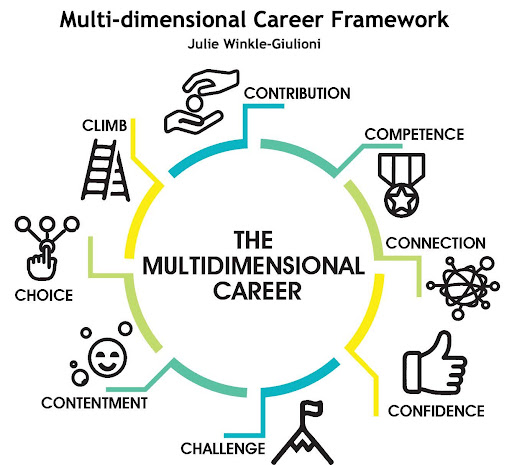
We don’t really deserve promotions if we don’t accomplish things. Accomplishments make our effort and paycheck worthwhile. To accomplish and achieve things, we have to work hard, and to work hard, we have to want “it.” That drive no matter how big or small, towards whatever goal motivates us is at the core of ambition. But why do we tend to look at ambition as narrowly as we do? To assume it means we want more authority, more money, more status? Just as often, people are motivated by making a difference, overcoming challenges, finding contentment, learning new things, social connections, and many other things. Julie Winkle Giulioni’s research for her book, Promotions are SO Yesterday found nine career motivations, most of which had little to do with what we think of as “ambitious.”
The gender gap in workplace ambition
You’d think there would be easy data out there on gender and ambition, but as usual, the true answer is that “it’s complicated.” There is apparently contradictory data to show both that women have less ambition than men and that women and men have equal amounts of ambition. It turns out that the key distinction many studies evaluated differed in the definition of ambition. In some studies ambition was interpreted primarily as vertical advancement (promotions to greater authority and compensation), while others included a wider variety of achievement types, more in line with Julie’s findings above. Researchers discovered this distinction by classifying two different ambition categories to explain the confusing findings on the gender gap in workplace ambition:
Vertical ambition (e.g. focused on power, promotion, and money)
Horizontal ambition (e.g., striving for self-development, mastery of the task in order to benefit communal goals)
As you might predict, men tended to score higher on vertical ambition and there was no gender gap on the horizontal dimension. This is consistent with other research on competitiveness, which has found that while men showed greater willingness to apply for projects described as “competitive,” both genders were equally interested in projects described as “competitive and collaborative.”
Women are becoming more ambitious over time. Especially since the pandemic changed many people’s assumptions about how work and life can be juggled, women are more ambitious than ever (as are men).
Roughly 80 percent of women want to be promoted to the next level, compared with 70 percent in 2019. And the same holds true for men. Women of color are even more ambitious than White women: 88 percent want to be promoted to the next level. – McKinsey Women in the Workplace 2023
So, is there a gender gap in workplace ambition? I’d say no. Women and men are both ambitious, but–for many reasons–what they hope to achieve and how they hope to achieve it varies. The problem is that most of our corporate cultures are quicker to reward the “vertical” and “competitive” ambitions more than the other types. This is mostly likely a product of the competitive environment firms must win in to stay afloat, and it fuels the male standard of competitiveness, which is no doubt self-reinforcing.
Can I be both ambitious and feminine?
This is the question I get asked most often by my female clients–especially the ones who come to me interested in vertical ambition. These ambitious women tend to run straight into that double standard in their own mind, where they assume they can be either achievement-oriented or feminine (i.e. nice, agreeable, pleasant, etc.) but not both.
It turns out these go-getter women are not the only ones. Most other women who seek out coaching to better themselves and their careers, even those who profess not to care much about vertical success, will cautiously admit that they really would like vertical promotions and recognition, they’re just afraid to say that out loud. Of course, they are succumbing to the same stereotypical double-bind assumptions as those who will admit their ambitious goals more readily, they’ve just leaned further into the “nice” end of the spectrum with their personal brand.
To their credit, all of these women are in touch with their authentic feminine selves enough to want to succeed and live in their skin as feminine creatures while learning, growing, advancing, and gaining power.
So, as with navigating all double standards, the solution lies in authenticity. The trick is to know your ‘why’ and what you want to spend your ‘drive’ energy on accomplishing. The clearer you are on your accomplishments, the more flexibility you give yourself in how you achieve them. And once you are clear on the goal, you can challenge yourself to solve this puzzle:
Know your goal and why it’s important to you and others
How can I manage employees who do and don’t display ambition?
Managers face an ongoing challenge in motivating their workforce, mostly because people are different. Everyone isn’t motivated by the same things. Most traditional business incentive structures favor those with vertical ambition more than those with horizontal ambition. This is a huge missed opportunity, and as the cost of employee turnover becomes clearer to companies, there is a more serious trend towards finding ways to motivate people who could care less about ‘achieving’ the corner office.
As a manager, start by reading Julie Winkle Giulioni’s book Promotions are SO Yesterday. It is chock full of great ideas on how to find out what motivates your employees, things you can often give them when you don’t have a promotion to hand out to everyone.
Also, be aware of your own biases. It’s natural for people to default to thinking everyone is motivated by the same things they are. If you’re a manager, you probably have some vertical ambition. That’s great! But you can’t assume that all your people do, or that even if they do, their ambition will look like yours.
For example, too many managers assume that when a woman takes time off to have a baby, she’s stopped being professionally ambitious. This is quite often not the case, she just can’t be in two places at once. Especially if her leadership is flexible with her–both on her time and her professional growth opportunities, she can come back “on line” for promotions in the future. Get to know your valuable employees, know what motivates them and feed that motivation as much as you can.
How can I be ambitious even if I don’t care about becoming CEO?
If you want to be the boss, you probably have an ambition profile that will be recognized and–if you’re good at your job and leadership–will probably be rewarded. Even so, you’ll need to navigate the gender gap in workplace ambition. See above for the four steps to authenticity, which will help you navigate these challenges, including some that are not gendered.
But if you’re not a vertically motivated person, get to know yourself as well as you can. What will motivate you to keep going? What drives you to succeed? Be sure you’re clear on this and communicate it to your bosses. This makes you less vulnerable to their stereotypes about you. If you’re that mom who wants to come back “on line” after kids, ask for assignments that can continue to help you grow even when you need more flexible time schedules. Do some career planning yourself and identify the gaps in experience you need to fill to be ready for the vertical opportunities you will seek in the future. Work with your company to help you fill the gaps in a way that also fits your life.
Curate your personal brand. Be aware that “doing good work” won’t get you what you want if nobody notices. Ambition means bettering yourself, but it also implies being seen as bettering yourself, accomplishing things that matter along the way, by people who can influence your career.
As you manage your personal brand, working around the gender gap in workplace ambition and other stereotypes and biases, remember that authenticity is your friend. Authenticity requires clear self-knowledge, drive, and hard work, everything an ambitious person has in quantity. Go for what you want, and don’t give up.
Tired of holding yourself back?
Then don’t.
FREE Executive Coaching consultation with Dana Theus
Double standard for women in leadership is an age-old problem, but it turns out that it’s not just a problem for leaders; it’s a problem for all women in the workplace.
Key Takeaways:
Numerous Double Standards: The article highlights the plethora of double standards for women in the workplace, ranging from leadership expectations to compensation differentials and age biases.
Rooted in Unconscious Bias: Unconscious biases and stereotypes drive these double standards, shaping perceptions and expectations about how women should behave and be treated in professional settings.
Personal Brand & Communication Evaluation Disparity: Women’s communication is evaluated differently, often with negative consequences for their reputations and careers, such as being stereotyped as “bitchy” or “bossy” for assertive behavior.
Age & Wage Disparity: Despite efforts to address it, women still earn less than men, with factors like weight, age, and parenthood affecting women’s pay negatively compared to men.
Leadership Challenges: Women in leadership roles face unique challenges, including the need to balance agentic and communal behaviors, along with differing gender expectations for delivering critical feedback.
Double Standards Between Men and Women in the Workplace
Few people find it surprising that women face double standards in society and the workplace. (For those who do find it surprising, I recommend (re)watching the Barbie movie–or just America Ferrera’s speech and its snub by the Oscars–for a refresher.)
The most common double standard in business that most women in leadership experience is the fact that men can–and often must–be ‘aggressive’ and direct in leadership (i.e., agentic) while women are expected to be more socially sensitive (i.e., communal). This frustrates many women who just want to get sh!t done, and I’m sympathetic to their plight. Still, it gives me an opening to work with them on broadening their emotional intelligence skills, as there are situations in which women are allowed to be more direct when they learn to read the room and build the most authentic reputation.
In any case, I have been watching this issue of double standards for women for many years, trying to understand it better and help the women I coach navigate through it. Over the last few years documenting research about women in leadership, I’ve become absolutely gobsmacked at the vast number of ways that women face unfair standards in the workplace and society. The ‘aggressive’ double-bind is just the beginning.
To be clear, there is not enough written about the double standards that men face in the workplace as well, but clearly they do face double standards. The saddest one, for both women and men, is that men are penalized for displaying the traits most valued in leadership literature, which are exhibited by women. Still, for now, I simply wanted to begin a list of all the research we’ve come across to show the many and varied forms a double standard for women can take.
This post was germinated by Inc. contributor Jessica Stillman who wrote, Women don’t face a double standard at work. They face a slew of them. So true, Jessica, so true. This list will be updated in the future as we find more (and I’m sure we will) evidence of the complexity women encounter when seeking success.
Unconscious Bias + Stereotypes = Double Standards
It’s important to see the double standards women face in their broader context as a result of implicit and unconscious biases we all hold. So, let’s take a step back and realize that our unconscious biases (and we all have them) drive our beliefs about what people “should” and “shouldn’t” do, which both sets our standards and leads to stereotypical thinking. No matter who you are and what you look, sound, or act like, you encounter unconscious bias that either works for or against you–and sometimes both. For example, it’s common for women to assume other women will support them, simply because they are women. Those women who do not conform to stereotypical expectations that all women “are sisters” often receive our wrath, but it can also demonstrate that those women are fair-minded, willing to think outside the box of stereotype, and only willing to provide their support judiciously.
Literally, every double standard will find an unconscious bias at its core. For example:
When men require women to “speak up” to be noticed, but then penalize them for doing so in ways men are not (e.g., interrupting, being too straightforward), it is because this behavior violates their unconscious bias that “women should be nice, and when they’re not they can be sanctioned or ignored.”
When women’s pay decreases as their weight increases or their age becomes more visible, when men’s salary remains the same or even increases, it’s evidence of the unconscious bias that heavier and older women are less confident and less capable.
When women who tout their accomplishments are penalized for their “bragging” while men who do so are rewarded, this demonstrates the bias many have that a women’s role is to support others more than themselves.
When a man’s salary increases due to parenthood, while a woman’s decreases, it’s evidence of the unfounded biases people have which assumes a man’s primary role is to be the breadwinner for his family and that mothers will be less devoted to their jobs.
When women are passionate, they are labeled “overly emotional” and less likely to be considered high-potential, whereas when men demonstrate passion they’re considered high-potential because they are thought to be more diligent and committed.
Personal Branding & Communications Double Standards for Women
One’s personal brand comprises many elements, not the least of which is the way one communicates. We’ve gathered data that suggests that women’s communication is evaluated very differently than men’s, and most often with negative consequences for their reputations, careers, and promotability.
The use of humor is a tricky communication element, as it may (or may not) be perceived more positively for women.
Males who listened to audio clips of a woman who interrupted another speaker during a conversation characterized the woman as “ruder, less friendly and less intelligent” than men who interrupted, which pointed to systemic gender disparities in how American English-speaking people interpret interruptions.
It’s well-documented that women, on aggregate, still make less money than men. With 50% of survey respondents stating that the reason for the pay gap is that employers “treat women differently than men,” we’re starting to gain some traction in recognizing the disparities. We think it’s worth examining how much of this wage disparity might be attributed to stereotypes about women that result in double standards for their compensation.
Research shows that for every six pounds an average American woman gains, her hourly pay drops 2%. Men’s weight does not appear to affect their pay.
Women at the top executive level of large European corporations earn an average of 1.2 million euros less per year than their male colleagues. Top executive pay also depends on whether an executive function (e.g., finance vs. human resources) is perceived as “typically masculine” or “typically feminine.”
Women don’t get as much credit for their achievements as men, performing better and still rated as lower potential for promotion.
Women’s pay decreases when they become mothers, while men receive a “pay premium” for becoming fathers leading to the so-called “Motherhood Penalty/Fatherhood Premium” effect.
Age Double Standards for Women
At every age, women face bias, but for different reasons. It’s as if there’s no “good” age to be, because women will always face headwinds – they’re either not experienced enough, “don’t look ‘vital’ enough,” or are “not relevant anymore (code for “too old”). Men do not face these same ageist judgments against them.
The pay gap widens for women as they age, but not for men
We often want to believe that as we gain more power and authority in an organization, rising through the ranks of leadership, our gender-related problems go away. Why? Because obviously, we’ve proven ourselves! There’s only one catch: competitive forces grow in the higher ranks, which means people are more critical of each other, rather than less. This makes the double standard phenomenon even more problematic for women at, or nearing, the top.
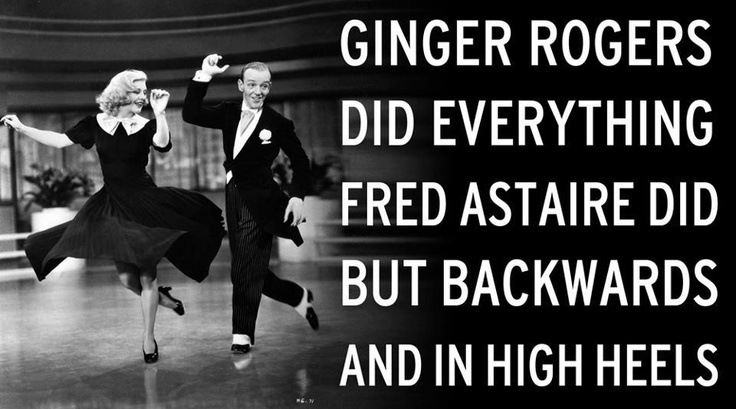
Men are considered good leaders when they display “agentic” behaviors alone, even if their “communal” skills are sub-par. By contrast, women are judged primarily on their “communal” skills (sought-after skills that are not always valued), while also having to demonstrate the sometimes-antithetical “agentic” behaviors of stereotypical leaders. This is Ginger’s plight, doing the same thing Fred did but backwards and in heels.
Workers have differing gender expectations when it comes to receiving critical feedback. Female managers who delivered strong critical feedback had double the magnitude of impact on worker job satisfaction. Researchers posit that it’s because workers are conditioned to expect “high standards”/harsh critiques from men, but not women. Women are supposed to be nice.
Women are more likely to pay a higher price for failure in their career than men do when they take bold risks. This “Gender Criteria Gap” double standard rewards women only for their outcomes, while men are rewarded for their perceived intentions–even if the risks they took generated suboptimal outcomes. As a result, women and men approach risk differently, which can work for or against an organization depending on how they approach risk more generally.
What does a woman do in the face of this?
While this list is daunting, and there are many ways of trying to deal with each of the issues listed above, I think it paints a larger picture of the way in which the dominant business culture still skews towards the white male standard. The true solution to fair treatment for women, women of color, and everyone else who is not a white male is for white males to see the unfairness of the system and expand their own thinking about the diversity of ways to succeed, which don’t always look like it does for them.
But absent enough of those individual men having an ah-ha moment, my clients and I have had success by engaging in a three-pronged strategy to address these dynamics in our own lives:
Let go of triggering anger. Anger can be useful in helping us find the courage to deal with clear inequities listed above, but when it triggers us, it makes us less effective. Once detriggered, we have a better chance of navigating the tricky waters of the double standard. Facing it head-on and rationally is rarely the best strategy, though when it is, we need the clarity and courage to own our emotions as we ask for fair treatment. When we can’t deal with it head-on, we need the emotional clarity to live with aspects of the unfairness while we work to prove ourselves and to demonstrate the uselessness of the double standard for women, the kind of demonstration that can change hearts and minds.
Use the opportunity to rise to your best self. Unfairness seems like a problem other people–the people treating us unfairly–must fix. And they do need to fix part of the problem, the part they control. But there are always aspects of our own behavior and approach, which we control, that we should explore before we blame others. When we do the work ourselves, we demonstrate to those we’re asking to change that we take ownership of our own engagement in the process. This looks different in different circumstances. Sometimes it simply looks like detriggering our anger so we can meet people where they are. Sometimes, it looks like adapting to certain aspects of the double standard that have value (for example, to become more outcomes-driven) and draw the line at what feels inauthentic and ineffective.
Stand with courage for what you believe must change, and be willing to own the consequences. This is the hardest part. Sometimes, taking a stand means facing disapproval. Sometimes it means quitting to find a place with different double standards for women, which are more navigable for you. Most of the time, it means sitting in the messy middle trying to help other people see how the inequity you’re experiencing affects them, and people they care about (hopefully, you!) in ways that are counterproductive.
If you’re female and reading this, I suspect you may be feeling like you’re in the messy middle of the double standard for women right now. Whenever you find yourself in the messy middle, make sure you have people on your side: colleagues, stakeholders, mentors, coaches, family, and friends. You are not alone, so be sure to remind yourself of that often.
InPower Women’s Mastermind
We don’t Mastermind your business. We Mastermind YOU!
Are women better leaders than men? The answer is a paradox: research says that women display more positive leadership characteristics than men but that most people believe that good leaders act more like men.
Exploring these contradictions paints a fascinating picture of the incongruity between people’s experiences of leadership and their stereotypes when it comes to both leadership and gender.
Key Takeaways
While plenty of men score high on top leadership qualities, women leaders often outperform male leaders in key leadership traits such as compassion, intelligence, organization, creativity, communication, empathy, honesty, and ethics.
Organizations with women in top management positions or on their boards generally report better long-term financial performance (which is an argument for gender-balanced leadership, not all-woman boards).
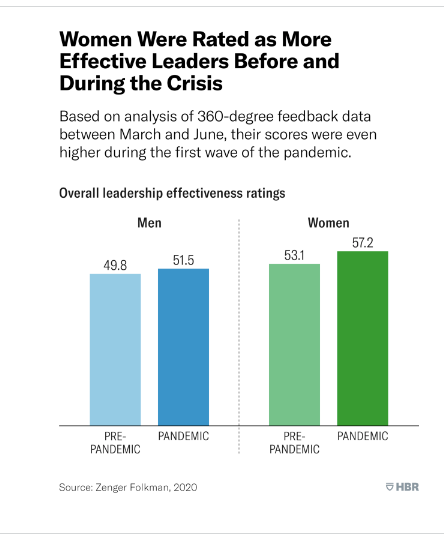
Women are 9% more likely to rate higher on scores of leadership effectiveness.
While female leaders must demonstrate both communal and agentic behaviors (i.e., independence and decisiveness) male leaders are only required to show agency.
Men hold 90% of Fortune 500 CEO positions and have longer tenures than women.
Yes, women are ranked as better leaders than men when viewed through the lens of experience.
It’s only possible to address whether women are better leaders than men by looking at what makes a good leader in the first place. It’s unsurprising that leadership characteristics break down into easily gendered categories. It may be more surprising to find that more of the most highly sought-after characteristics are thought by a wide variety of people to be feminine.
A fascinating 2013 study called The Athena Doctrine researched to code leadership traits in thirteen countries through the gendered lens. Their findings concluded that a majority of people around the world are dissatisfied with the leadership behaviors and codes of conduct–control, aggression, reckless risk-taking–most often displayed by men.
The research rated eleven of the eighteen desirable leadership traits as “feminine,” or more likely to be displayed by women. Here are the most desirable traits and behaviors that people tend to think of as “feminine” (in rough order of preference):
Plans for the future
Expressive
Reasonable
Loyal
Flexible
Patient
Intuitive
Collaborative
Passionate
Empathetic
Selfless
Here are desirable traits and behaviors that people tend to think of as “masculine” (in rough order of preference):
Decisive
Resilient
Analytical
Independent
Aggressive
Proud
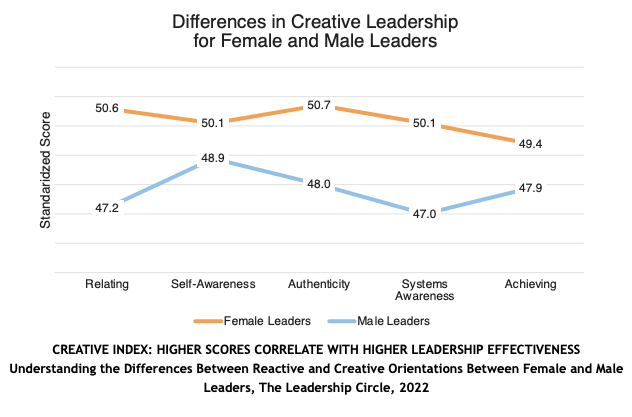
Numerous studies have gone a level deeper to look at actual leaders and gather people’s opinions of their effectiveness. A particularly compelling data set emerged in 2022 from 360 assessment results by the Leadership Circle of 130,000 leaders. The research found that while women and men were roughly equivalent in mastering relational and achievement-oriented leadership styles (both important to success), women ranked higher on all five elements of creative leadership abilities that positively correlate with leadership effectiveness:
Relating to others
Self-awareness
Authenticity
Systems Awareness
Achieving
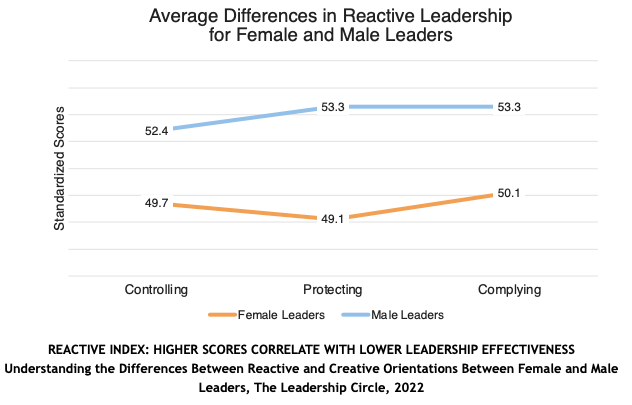
The opposite was also true. Men ranked higher on all three elements of creative leadership abilities that negativelycorrelate with leadership effectiveness:
Controlling
Protecting
Complying
The end result of this data analysis is that when these scores were analyzed for leadership effectiveness, of the kind that produces business performance results such as those listed below, women were 9% more likely to be rated as effective leaders. Effective leadership as evaluated in this study include the following results:
sales/revenue growth
market share
profitability/ROA
quality of products and services
new product development
overall performance
Another study which has been reported over the last decade also relies on 360 feedback and has found that women have higher levels of engagement and generally excel on thirteen of nineteen of the leadership competencies measured. Below are the scores where women excel (+) or lag (-) men’s scores
Statistically significant:
Take initiative (+10)
Learning agility (+9)
Inspires and motivates others (+7)
Develops others (+9)
Builds relationships (+7)
Displays high integrity and honesty (+8)
Communicates powerfully and prolifically (+5)
Collaboration and teamwork (+6)
Champions change (+4)
Makes decisions (+7)
Drives for results (+7)
Values diversity (+10)
Establishes stretch goals (+5)
Not statically significant
Innovates (+3)
Solves problems and analyzes issues (+3)
Customer and external focus (+2)
Develops strategic perspective (+1)
Technical or professional expertise (-2)
Takes risks (+1)
Female politicians, for example, are regarded by 34% of adults as being more adept at working out compromises than their male counterparts, highlighting the gender gap in this area. In the business sphere, women leaders have a clear advantage over men in these aspects, and other women in leadership positions can learn from their success. Interestingly, women tend to excel in these areas more than their male counterparts.
Taken together, this evidence shows that people rate the leadership style adopted by many women as highly effective in senior leadership positions. Unlike their male counterparts, who more often lean towards authoritative and transactional leadership styles, women leaders often embrace a transformational leadership style that engages and respects employees, customers, and stakeholder communities. This style encourages team involvement and addresses employees’ emotional and psychological needs, a stark contrast to the clear structures, rewards for performance, and task monitoring favored by men.
Furthermore, female leaders often utilize influence tactics that are more collaborative and democratic. These tactics involve listening, sharing power, and striving for consensus, as opposed to men who more frequently employ assertive influence tactics like giving direct orders and leveraging their power to persuade. Female leaders also gain an advantage from perceived honesty and ethical behavior.
Do Women in Leadership Run More Successful Organizations?
Yes, women run more successful organizations when leading alongside men.
What are the practical implications of these facts? Are there tangible benefits that organizations enjoy from having women in positions of leadership?
Studies indicate that positive long-term financial performance is associated with companies that have a meaningful percentage of women (30% or more) of women in top management roles. The ratio of female executives even correlates positively with financial performance measures in Fortune 500 firms. Over a period of three years, companies with higher diversity in management earned 38% more of their revenues, on average, from innovative products and services than those companies with lower diversity.
Studies have shown that gender diversity and inclusive cultures–welcoming of diverse styles and identities that include both women’s and men’s leadership styles–produce a wide variety of organizational and business benefits, including:
lower levels of employee turnover
59.1% increase in creativity, innovation, and openness.
37.9% better assessment of consumer interest and demand
improved financial performance on eleven different criteria
38% more of their revenues
increase employees’ job satisfaction and commitment to the company
less discrimination and sexual harassment in inclusive workplace cultures
fewer instances of fraud
Resilience during economic downturns and recession
Organizations where women held at least 30% of board seats outperformed their peers in eleven out of fifteen sectors during the pandemic. This suggests that having women in leadership roles is not just beneficial but crucial for an organization’s success.
Women are also generally thought to be more effective than men at leading during times of crisis.
A significant factor contributing to this success is the priority female leaders tend to give to building robust customer and employee relationships. Women in leadership positions are inclined to focus on relationships and have an interdependent view of their role within the company, promoting customer-centric strategies.
Take female CEOs as an example. Their habitual use of inclusive language signals a drive toward collective success. This focus on inclusivity, employee engagement, and customer relationships not only benefits company financial outcomes but also equips companies to better understand and cater to a diverse stakeholder base, strengthening market relevance and loyalty.
Are Women (Really) Better Leaders?
No, viewed through the gender lens of stereotype, most of us don’t trust women to lead better than men.
As we know, human behavior and belief are almost never simply a product of data, and data does not always provide a complete picture of reality. Gender stereotypes are some of the most prevalent in human culture, literally built into our language, laws, and unconscious beliefs.
It should not be surprising to learn then that most people believe good leaders display behaviors most often correlated with male behavior. In other words, the stereotypical leader looks and acts like a man. And while this correlation has weakened over time, it is still true that the most important leadership traits remain self-oriented “agentic”, focusing on goal orientation and task focus:
independent
competent
assertive
decisive
Unfortunately for women, when they demonstrate these characteristics, they are penalized and labeled everything from “bitchy” to “not a good culture fit.” Women are rewarded for the following communal behaviors:
agreeable
compassionate
trustworthy
moral
Female leaders, to be successful, must demonstrate other-oriented “communal” tendencies that build relational connectivity and social cohesion–at the same time, they appear agentic enough to instill confidence and drive the kinds of business results men achieve with such behavior. The solution for women leaders who must navigate this double standard in order to avoid the “nasty woman” backlash effect is to:
be communal, acting in accordance with feminine stereotypes to some degree, and
find authentic and communal ways to be agentic, which do not trigger the negative feminine stereotypes
By contrast, men may simply be agentic and be viewed as strong leaders because they fit the primary leadership stereotype.
If you don’t believe that this double standard is pervasive, it’s time to update your beliefs. Many studies, like this one on college professors, show that women and men alike tend to have higher standards for women than for men in all kinds of positions of authority.
Despite the fact that this double standard persists through time, stereotypes are definitely changing as more women participate in the workforce and ascend into leadership positions. Perhaps the most telling data to show how stereotypes have changed comes from a long-standing Gallup poll question asking, “If you were taking a new job and had your choice of a boss, would you prefer to work for a man or woman?” (Brenan, 2017). Since this question first appeared in 1953 the public’s attitude towards female leaders has changed dramatically, the gender preference for men dropping to legible levels, and a majority of people holding no gender preference at all.
Despite data like this, opinion polls show that people expect women be more communal more often since the mid-20th century, while expectations on men–that they be more agentic–have not changed. This speaks to the power of stereotype often leading to the fact that we hold contradictory ideas in our minds at the same time.
Is It Enough for Women to Be Good Leaders?
No, many things must change to impact gender inequality.
While it’s tempting to look at data on stereotypes above to explain the continued underrepresentation of women in organizational leadership, the true picture is more complicated. Here are a few of the kinds of barriers women experience on their path to leadership that either block their path or simply tire them out and encourage them to look elsewhere for gainful employment:
women don’t often get the kind of credit they deserve, performing better and still rated as lower potential for promotion
Despite frequent male dominance in leadership roles (in 2024 men hold 90% of the Fortune 500 CEO roles) reinforced by a male-oriented stereotype of good leadership, women match and often surpass their male counterparts in the characteristics, skills and traits they need to lead effectively. But for organizations to perform well, we need both women and men operating in positions of power, bringing their unique strengths, talents and experiences.
Support for this comes from a variety of different kinds of studies, where female leaders consistently demonstrate their prowess in crucial leadership abilities.
The solutions are multifaceted, including leaders learning to manage their own biases and beliefs about gender stereotypes and leadership stereotypes. But we must go beyond individual actions and take organizational actions that mitigate the natural tendencies individuals have to see leadership through a gendered lens. This is how to bridge the gender gap in leadership.
So, what do you think? Are women better leaders than men?
InPower Women’s Mastermind
We don’t Mastermind your business. We Mastermind YOU!
Office politics is as much a part of work as drawing a salary. And yet, I don’t know anyone who wants more of it.
In fact, many clients come to me because they feel stymied in their career advancement goals because they perceive “office politics” to be getting in their way. People blame office politics for everything from making them unproductive (e.g., sitting in unnecessary meetings cozying up to the “higher ups”) to putting up barriers due to favoritism, bias or “baggage” of various sorts (e.g., gossip sullying their reputations.)
Throughout most of my career I have felt the same way about the peculiar interpersonal group dynamics that dominate the way people interact in an organizational context. When I started coaching and heard so many other people citing office culture and interpersonal relationship dysfunctions as a career hurdle, I started paying more attention.
I certainly used to think so. But with miles on my odometer, I’ve come to realize that unconscious bias trumps merit more often than the reverse. And it’s probably going to be that way for a long time because organizations are just groups of humans who come together to make things happen. Human group dynamics require communication and emotional intelligence, but they also offer us opportunities to be our whole selves. Along with all this comes the constant struggle to balance bias and flawed judgments with merit, productivity, and outcomes.
The office:A perfect petri dish to see what a drop of human insecurity plopped into a base mix of miscommunication, misalignment, and differing objectives might brew.
I had originally thought of office politics as simply a derogatory word to describe human and group dynamics among people forced to spend too much time together. But with observation I now think of these group dynamics, including the political elements, as a unique environment offering each of us the challenge to rise to our better natures.
Especially as our personal connections outside work trend towards tighter connections with people more like us, creating polarization and alienation at the level of civil society, the workplace is one of the few places left where we have incentives to get along with people who are NOT like us. Work provides us a rare opportunity to create spaces where psychological safety breeds creativity, inspiration and innovation.
And if we turn our irritation into motivation to improve our social skills and ability to influence others in complex social systems, we rise to our higher potential. This higher opportunity exists both in our own achievement and in positively affecting others. Of course, the skill of this is to do it without losing our values, our morals or our minds.
Are office politics more detrimental to women’s careers?
Immediately upon beginning to observe office politics more closely, I noted more women than men articulating “politics” as a career dilemma. This surprised me because generally women are strong communicators, good at establishing relationships and adept at emotional intelligence. All these skills should help them survive and thrive in any group dynamic, so why would women struggle so much to surf the waves of interpersonal relationships in the workplace?
Over the years I’ve come to believe that many women struggle most in those office politics environments where a stereotypically male work culture permeates. Typically when women encounter highly competitive, ruthless and gender toxic environments, they feel less equipped, less tolerant and less interested in following the cultural norms than men. Because they don’t play by the rules of the male-defined culture, they’re more readily ostracized by it, facilitating their belief that they’re in a no-win situation. Penalized by the culture, they struggle to receive the kind of visibility and recognition needed to keep opening doors and receiving opportunities.
This is true for men who don’t buy into cultural norms–or aren’t welcomed into a dominantly female office dynamic–as well. Plenty of men have complained to me that they are held back because they refuse to “play the game.” And indeed, office politics of any flavor is a game of sorts, as is business itself.
All that said, you can’t win a game you don’t play.
Playing the Game vs. Taking it Personally
Whether we like it or not, most business endeavors (including nonprofit and academic environments) are essentially games we play to try to accomplish some kind of goal. It’s a “game” in the sense that you have a limited set of players, pieces, rules, and a goal. The challenge is to reach the goal using the players, pieces and rules you have access to. If you can’t make it work, including by changing some of the players, pieces, rules and objectives, you have to put away the board and go play somewhere else.
Office Politics: You can’t win a game you don’t play. ⇐click to tweet.
Of course, real people’s lives and livelihoods get caught up in this game, and to most of us it doesn’t feel like a game at all. This is where office politics tends to factor in as our attention drifts from the business game and we jockey for interpersonal security and acknowledgement.
To make matters more murky, most of us don’t feel like players in the business game itself, giving us little else to do but play interpersonal (political) skirmishes on the sidelines. While board members and senior executives focus on the major business strategy, little of that usually reaches employees in ways that captivate them personally. Leaders have some level of strategic authority to roll the dice and make the moves in the business game, but most employees are just pieces on the board getting moved around, often without a real sense of the objective, much less the rules.
Gender Dynamics in Office Politics
Here’s the gender dynamic: men tend to arrive in their careers already acculturated to playing the business game and sloughing off interpersonal dynamics, while women tend to have been acculturated to playing the people game with less investment in the business game. This makes women more vulnerable to being interpersonally ostracized and less skilled at seeing it all in the context of the business game.
Of course, business is neither totally a game of objectives or interpersonal belonging, it’s both, and women and men need to balance these perspectives to succeed. Men who focus too little on the interpersonal dynamics can become isolated and/or hurt others. Women who overcompensate on people issues can find themselves taking some aspects of the game too seriously and too personally, and in doing so may be less effective or discredit themselves in the eyes of the game-players.
In the end, I advise my clients to play the game, and learn to navigate office politics adeptly, if they want to rise higher in the organization.
I also advise them not to take the business game too personally and to play the interpersonal, office politics, game by taking the high road. This becomes an exercise in stretching themselves to grow emotionally and in learning to manage risk, manage the business issues and gain experience in setting boundaries, among other things. All good skills to have in the game of life as well.
InPower Women’s Mastermind
We don’t Mastermind your business. We Mastermind YOU!
Originally written in 2012 to announce The Woman Effect, I still stand by this and will be updating it in 2024. Stay tuned!
Have you noticed the steady drumbeat of research studies coming out over the last 15 years – I mean real, serious research – that find that when more than 30% of an organizations’ leadership is made up of working women, the organization is measurably more successful? When I first started reading about this research, almost a year ago, I thought that this must be little more than an anecdotal feminist narrative that women are great. I was about to dismiss it as wishful research (on my part and others’) when I stumbled across studies by McKinsey & Associates (2007) and Catalyst (2010) that probably started all the subsequent studies regarding women in business.
Reading more deeply I noticed a few things that made me sit up and take notice – these studies included exhaustive analysis across sector, country and organization size. They documented improvements in organizations with women in leadership as measured by productivity, profitability, corporate culture and sustainability – in ten different categories of performance. Catalyst’s 2011 numbers show that companies with a significant percentage of women on their boards performed better than those with no women on their boards by 84% return on sales, 60% return on invested capital, and 46% return on equity.
All this women-are-good-for-business stuff wasn’t a fluke! I began researching this phenomenon more deeply, as of today InPower Women has indexed over 200 research studies since 2007 that measure the positive impact of women in business and that paint an intricate reality about the potential and challenges of women in business and the economy.
Then I started talking to other working women – my colleagues, clients and friends – about this research, many of whom were in positions of power in businesses, nonprofits and government. They all said, “Really? I had no idea! How cool!” What? They didn’t know either? I was shocked and felt compelled to get the word out.
The Woman Effect Was Born
The fact is that a significant presence of female leaders in an organization measurably contributes to its health and wealth. Period.
Know what this means? It means that even with our negative self-talk, feeling never enough and work-life struggles – we are more than enough and we have become a critical ingredient for economic success.
It means something else too. It means that when we get rid of the negative self-talk, feelings of never enough and work-life guilt, women have the potential to be an even more significant factor in healing our economy and our world.
In fact, economists at The World Bank and other development institutions have been doing parallel research in developing nations and found that when girls and women thrive in villages and towns anywhere on the globe, their communities and economies are healthier and wealthier. I tip my hat to The Girl Effect for getting this word out through philanthropic circles over the last few years. And yes, I chose “The Woman Effect” to reflect this parallelism – because it is indeed the same phenomenon. For many reasons, which I’ll delve into more deeply in future blog posts, the female of our species is equipped to make every effort she is a part of thrive. What the research is showing in developed and developing economies both is that our impact on business is no different than our impact in little villages and organizations everywhere. The Woman Effect is in our blood, hearts and minds. It’s part of who we are.
No More Excuses
The Woman Effect has one other implication, which is the reason I’m devoting my professional life to exploring it, raising awareness of it, giving it voice and inviting others to join me and create a powerful chorus. Here it is: now that we know The Woman Effect is not just some wishful idea but real, every woman who participates in the economy which means all of us (even if you ‘stay at home’ and exercise consumer power and raise the next generation of economic participants) – we all bear a responsibility to activate our personal leadership power to play a significant role in the economy. We bear this responsibility whatever that looks like in each of our individual lives – whether you aspire to be on a Fortune 100 board, run a kickass small-or-not-so-small business and/or play a leadership role in your volunteer and family life. Why is this your responsibility? Because it all matters. Because it is your world. And because you can.
For me, personally, this means no more excuses. No more whining. No more victimization. My intention from here on out is to use the personal power within me that I can use to activate change and good things in the world. Starting with this. Starting with you.
What about you? Are you ready to put the excuses aside and activate The Woman Effect in your life? In your business? If something is in your way, how will you let it go so you can claim your power to lead? What will it take for you to say “no more excuses”?
I welcome thoughts – and especially declarations of how you are living The Woman Effect in your own life – in comments below. Please share this page and invite others!
FREE PDF Guide to Women in Leadership
Executive Coach Dana Theus shares her tried and true strategies to help women excel in higher levels of leadership and achieve their executive potential.