If your New Years resolutions are already in danger, enjoy some tips from Leslie on how to make them real. – InPower Editors
My work as a coach is to help people increase their capacity in an area that really matters to them. For some, it’s the capacity to connect more fully with others. Or to follow through. To inspire others. To take a stand. To stand down. To…
As far as I can tell, there’s no capacity-building without practice: the regular repetition of new moves. Most people would agree on that. So if we know that practice is such a key to growth, why do we often struggle to maintain even the simplest of practices? Why do we wriggle out from under the very effort that will help us fulfill our most ardent intentions?
If we want to grow, our challenge is to become more consistent in practice… and to do so without sicking our “inner terrorist” on ourselves. I’ve found four places to focus when my practices falter: function, form, feeling and ‘futz.’
Focus on function Let’s face it; practice can be kind of a drag. It’s often not all that interesting; sometimes it’s downright uncomfortable. And it’s often hard to see an immediate pay-off. To make matters worse, many of us relate to practice as an external ‘should,’ an assignment from some cosmic schoolmarm. Few of us relate to practice as what it actually is: the engine of our own fulfillment, created on our behalf toward the accomplishment of our own deep desire.
Let me offer myself up as an example. I tend to resist meditating, despite the overwhelming proof of its all-around-awesomeness. As a practice, meditation is conceptually compelling to me, but less so on a practical level. So I falter. One way to help sustain a practice is to ensure that it serves a function that is real and meaningful to you. If it does, keep reconnecting to its underlying purpose. That will help fan the flames of commitment. But if you’re doing a practice without a clear intent, rethink it. However virtuous a practice may be, it won’t be a ‘good’ one for you if it doesn’t link to something that really matters.
Focus on form Getting clear on the function of a practice is the basis for discerning its appropriate form. Continuing the meditation example… I don’t aspire to enlightenment. I don’t lust after mind-blowing altered states or blinding insights. My greatest aspiration is that I might bring a friend, a client or a Food Lion check-out clerk some warmth and safe harbor in her day. If sitting on a cushion doesn’t help me do that, maybe it’s not the right form of practice for that goal. Maybe a more potent exercise for me would be something to do ‘out in the world,’ like noticing when I’m impatient and breathing into my heart. Form must follow function.
Focus on feeling There is something existentially big about carrying out a practice, even if it’s a really small one. The mere doing of it is a powerful turning toward oneself. It is a gesture of remembering and respect that communicates to your own being, “You matter. I will show up for you.” So even if ‘breathing into my heart’ feels rote and superficial today, I am bolstered by the mere fact of having kept my self-promise. It’s often the satisfaction of not abandoning myself that propels me into practice.
Focus on the ‘futz’ If a practice is effective, it’s going to mess with your head. It’s going to futz with the status quo. It might make you sacrifice something you usually put at the top of your priority list. It might cause you to feel incompetent or uncomfortable. Know that. Know that your practice will put your treasured equilibrium at risk. Then you can anticipate that and investigate it, kindly, when it happens. That will give you a real and awakened choice, vs. unconsciously collapsing in the face of discomfort.
What about you?
What practices do you engage in consistently?
What makes your consistent engagement possible?
In what ways are those practices well formulated to achieve a clear purpose that you care about?
What does it feel like to engage in the practice? To what degree do those feelings sustain you in practice?
Is there any practice that you regularly wriggle out of?
Does it clearly support a strong and true aspiration? Is there a clear and compelling function that that practice supports?
Is there a way in which the form of the practice could be changed, so that it more directly supports your aspiration?
Whether or not you enjoy the practice itself, can you connect to a positive feeling you get when you actually do it? Can you leverage that feeling to sustain you in practice?
What is getting futzed with when you do these practices? What internal value, belief or habit does the practice threaten?
Originally on: LinkedIn
Take charge of your career development to get the job that supports your work and your life. Check out the tools and resources in the InPower Coaching Career Center.
The Oscar nominations are all the buzz after last week’s announcements. Even though 2015 saw some very strong roles for women in film (did you see Suffragettes?), as a whole the entertainment industry is still lacking in gender and racial diversity so we thought InPower Women should highlight a program that is trying to fix that. – InPower Editors
by H. E. James
I admit it. I’m addicted to Netflix, especially anything that’s related to murder or the law. Why? I wanted to be a cop when I was a kid, but circumstances led me on a different path. Watching murder mysteries on Netflix is an escape into worlds I will never know otherwise.
One world that I stumbled on is the world of the Honourable Miss Phryne Fisher, and it opened my eyes to the gender gap in the entertainment industry.
A creation of woman-owned Every Cloud Productions, Miss Fisher’s Murder Mysteries is distributed by the Australian Broadcasting Corporation. The second episode hooked me when one character says, “Well, it will be a pleasure to serve a respectable lady with a strict routine who appreciates the quiet life,” and his companion responds by spitting out his drink.
The women who founded Every Cloud, Fiona Eagger and Deb Cox, create characters like Phryne and Myrtle in the Dressmaker, and we need more of these strong female leads in today’s film and TV industry worldwide.
In order to ensure that the Australian film and TV industries see more women in film like Fiona and Deb, Screen Australia has created Gender Matters. The initiative is based on research that shows a discrepancy in funding for projects with women in key creative roles or writer, producer, director, or main protagonist. It aims to inject $5 million Australian in funding directly into projects with women in at least three of the four main creative roles.
This initiative has potential to set the bar for gender equality in the entertainment industry around the world as audiences have more opportunities to see strong female characters in compelling and entertaining productions.
Gender Matters cites statistics showing that women in film are underrepresented across the board in the four key creative roles, especially in film. In Australia, of the 37 films released in 2014, only 16 percent were directed by women. In a worldwide study titled Gender Bias Without Borders, SeeJane.org showed similar statistics in the film industries of major countries around the globe. The films were created by production companies from Brazil, Germany, the United States, the United Kingdom, Australia, and many others. For the top films screened in the international markets, no U.S. films were helmed by female directors. Australia did a little better, seeing 8.3% of its films screened directed by women.
Strong female characters are better represented when women are behind the scenes. Screen Australia noted that 74% of its films directed by women featured a female character, while just 24% with a male director did. In the Gender Bias Without Borders study, the ratio was 37% to 30.2%.
Mind the Gaps
These gender gaps in the media exist for reasons not wholly in control of the women in the industry. In the U.S., where Hollywood reigns supreme as the decision-making hub, agism factors into the equation as much as sexim. Both male and female actors receive a similar numbers of roles well through their 20s.
Yet when female actors reach 30, the curve on the graph drops dramatically. For male actors, it continues to rise, not dropping until they hit the ripe old age of 46. Why the agism? Screen Australia points to simple bias in the industry as a reason, and this is echoed by the creator of the Center for the Study of Women in Television and Film, Dr. Martha Lauzen. “There may be some bias at work,” she stated to Variety regarding major releases versus independent film.
The wage gap that gets constant press throughout the world, and rightly so, exists not just because of inherent bias in the industry, but also because of a reason cited in Gender Matters: Women can sometimes lack self-belief or self-confidence to see to their own career progression. Female actresses are as susceptible to this dynamic as any women in any other industries.
In her essay regarding the Hollywood pay gap, Jennifer Lawrence pointed to her own needs to get along in the industry, or “be liked,” as she put it. She’s correct in her assumptions that it could be her age. She is, after all, just 25. Or that it could be her personality. There are men, too, who are pleasing to the point of self-destruction. However, Lawrence’s resume is impressive. She has been in nearly 30 projects in her short career, and her first credit was an appearance on the celebrated show Monk. She is right in demanding better pay for her work than she gets.
If you have the experience, you should receive the pay and the work.
Leading by Example
No matter the industry, it appears that wage gaps in the U.S. are a fact of life. Men made nearly $900 per week compared to just over $700 per week for women in the third quarter of 2015. Even in nursing, an industry traditionally dominated by women, men earn more.
We women make up nearly half the world’s population today, and in Australia and the U.S., we outnumber men. There is power in numbers, and when coupled with initiatives like Screen Australia’s Gender Matters, we have a great ability to forge change in the entertainment industry, and perhaps beyond.
It’s up to us to be inspired by women like Phryne Fisher and the women who’ve brought her to the screen, who don’t take no for an answer.
About the author: Hattie James is a writer and researcher living in Boise, Idaho. She has a varied background, including education and sports journalism. She is a former electronic content manager and analyst for a government agency. She recently completed her MBA and enjoys local ciders. Tweet at Hattie: @hejames1008. Find her on Linkedin.
FREE PDF Guide to Women in Leadership
Executive Coach Dana Theus shares her tried and true strategies to help women excel in higher levels of leadership and achieve their executive potential.
There’s merit to the feminist narrative that says professional women aren’t hired for the top jobs as often because corporate cultures aren’t accommodating and sexism still exists – but sometimes it’s not about that at all. Sometimes, high-achieving women leaders are just not ready, or we aren’t investing in ourselves appropriately or we stress the wrong things in the interview. And while the former issues seem bigger than us as individuals, we can sure as heck prepare better for an interview! Here are some job interview tips for all levels, but if you’re a professional women hoping to skirt the glass ceiling and land yourself in the executive suite, scroll right to the bottom. (more…)
You don’t know where you are going if you don’t know where you have been.
It’s a common cliché, but it can be true – especially when we talk about women and leadership.
When we think about historic women leaders, names that frequently come to mind are Cleopatra, Joan of Arc, Elizabeth I. We don’t often hear about women leaders in our history classes in school – we are taught that men have traditionally led countries, armies, and philosophies.
This means that men have more leadership role models in history and women typically don’t. And this leads us to quickly realize that trailblazing is hard! We believe that we are doing something new that women haven’t really done before.
What if that perception wasn’t quite right? What if women have been leading – not as often as men – and we just weren’t told much about it?
That changes things – especially what it means for women to lead today.
If we believe that women leading is a new idea, then each time a woman encounters struggles or faces opposition, we accept that it’s just women forging new territory. But if we believe that women have led before then leadership transitions from being something men have traditionally done to something that people – men and women – do.
I recently did some quick research about women leaders before 1700 AD and there are a number that we don’t often hear about in history class.
One favorite is Hildegard of Bingen. She was a nun who lived around 1100 AD. We tend to think that women religious leaders didn’t have a lot of power, but this isn’t true. She is considered to be the “greatest woman of her time,” and was a type of “Dear Abby.” She was elected to lead her monastery by her sisters and maintained her position until her death. She wrote over 300 letters, a musical play, 72 songs (still played today), 70 poems and 9 books. She also had visions.
…Pope Eugenius III sent a commission to inquire into her work. The commission found her teaching orthodox and her insights authentic, and reported so to the Pope, who sent her a letter of approval…She wrote back urging the Pope to work harder for reform of the Church.
Another favorite is Hrotsvitha (b 935 AD). She is considered to be the first woman playwright, and much of her work was set aside and not performed for at least 500 years. Hrotsvitha was strongly aware that her gender made her less likely to be taken seriously as a writer. She used a number of strategies to counter this, including arguing that her talent is divinely inspired, leveraging the etymology of her given name to to back this up (it technically meant “strong honor;” she interpreted it as “a clarion voice”).
In China there was Empress Wu Zetian (624-705 AD). It is said that she achieved power through ruthless and unconscionable means, including killing her own children. However, some of those stories have been doubted by historians because at that time in Confucian beliefs severely limited women’s roles in Chinese society. Women just did not lead.
Despite that, her achievements included:
A peaceful and prosperous reign
Introduction of meritocracy for bureaucrats
Being open minded to act on advice from her ministers
Agricultural growth
Reduced taxes
To help shift the perception of women in society, she:
Required children to mourn both parents, rather than only their father
Replaced Confucianism with Buddhism
Published a book Biographies of Famous Women to raise awareness of women’s achievements
There were a number of Ethiopian Empresses who challenged – and won – military conflicts against Western empires. There is much confusion in these stories, however, because the word for empress was Candace, and historians have a tendency to flip-flop the name Candace between being a name and title. There are many writings about Candace of Ethiopia, from legends where her army defeated Alexander the Great to leading the Kushites against the Romans and winning.
My other favorite women in history are Roman women. They weren’t allowed to be rulers, but they held a lot of influence over the men in charge. In one instance, Hortensia, an orator, gave a speech before the second Triumverate against them taxing 1500 women:
Not having any say in politics themselves, the women were furious at being taxed for a war they had nothing to do with. The women arrived at the forum with Hortensia as a representative to make a speech to the triumvirs.
The outcome: only 400 women were taxed and the government went to find other men to pay.
There are many more women who had a profound impact on history (see links below). And note that this covers on 3 continents – I didn’t even get a chance to to explore women leaders in the Americas before 1500.
If we took some time to research women leaders of the ancient world, we would find a number of role models. We need to stop thinking that women leading is something new and that we are the only ones breaking through the “glass ceiling.” And imagine if these are the women that we do know about, who may have been written out of history?
We need to keep women’s history alive so we remember what’s possible for women. We can only do this by talking about their achievements, including men in the conversation, so collectively we can have a different understanding of what it means to lead.
Executive Coach Dana Theus shares her tried and true strategies to help women excel in higher levels of leadership and achieve their executive potential.
It’s Fall in Washington, DC. Watching the leaves turn color always makes me think about change.
Did you know that when the leaves turn, the green does not actually change into a different color? Rather, the chlorophyl that creates the green color simply falls away, revealing the amazing reds, oranges and yellows that were there all the time. The leaves let go of something, and something else – often quite spectacular – emerges.
There’s a lesson in this for us. If we want to change, we often assume that we have to make ourselves into something new. Yes, change takes work. But the turning leaves remind us that there is an important receptive, “grace-full” aspect to change. Rather than will ourselves into a different color, we first need to allow our dominant hues to recede. Change starts with letting go.
Here’s an example from my own life. “Effort” is one of my dominant personal traits; it’s my “color green.” I tell myself that applying maximum effort to everything I do is the key to my effectiveness. In part, this serves me and others well, because it causes me to strive for high quality in everything I do. But there’s a huge downside. I often expend more energy on something than is necessary or useful. I can get wound up in perfectionism and over-thinking, which often detract from the quality of what I’m doing. So this strong trait of mine, which has worked so well and so often, can also tie me and others up in knots.
So it’s time for a change. I’ve tried willing a new ‘zen me’ into being. And you can imagine how well that’s gone. Any shifts that I have experienced have arisen gradually from relaxing my cherished ways. Letting go has allowed other colors to emerge: colors that are more interesting and effective than I could ever have manufactured.
Relaxing my grip on efforting, I become naturally a bit more open, more collaborative, less tight. I waste less time and drive myself (and others) just a little less nuts. And often, the quality of what I’m doing is as good as or better than what I produce when I work something to death. I haven’t made change happen; I’ve simply eased up a bit on my dominant hues.
It’s a gentle process, but it is not easy.
It takes awareness to notice our “color green” moves.
It takes intention to resist engaging our default.
It takes a bit of courage. If we relax the grip on our ‘color green,’ how do we know what hues are lying in wait? What if we don’t like them? What if they don’t work?
It requires restraint and patience to let go of our dominant moves in small increments, so that our ‘green’ can fade gradually.
If you want guidance on how to make a natural and lasting shift in how you manage or live, watch the leaves and follow their lead.
What about you?
What aspects of yourself do you feel have outlived their usefulness as dominant characteristics or habits? (Not ones that you would want to lose altogether, but that you’d like to augment with other hues.)
What mechanism might you set up to notice when you’re leaning into your “color green” yet again?
Once you notice that you’re “greening” again, what small experiment could you make to simply relax that pattern just a bit?
When you relax your pattern, watch what new hues emerge: within you, in the quality of your actions, and in your interactions with others. Don’t look for radical change, but rather for small hints of something new.
And in case you need more inspiration, here’s a wonderful song by Carrie Newcomer about leaves, letting go and and the emergence of something new. Happy fall!
Every few days, my tech-savvy father sends me a simple reminder via text — an image, a saying, a blessing or a piece of wisdom to remind me about what’s important in life. The other day, he sent me this powerful quote from Bryant McGill: “You have to accept that you’ll never be good enough for some people. Whether that is going to be your problem or theirs is up to you.”
This message was especially well timed, as I had recently been doubted and disrespected. I was told that my dreams were too big and that I was naive to think I could be part of pulling off the proposed vision with my level of (in)experience. As much as I proactively fine-tune how I present myself, being doubted because of my age was not a first-time occurrence. I’m convinced it won’t be the last.
Like most people my age and with my experience level, I have a long way to go in terms of being an excellent leader. I’m aware that I’m learning and that respect as a young leader is difficult to earn. Nonetheless, it can be disheartening to be repeatedly shot down by people who judge solely based on age. Troubled, I phoned my mentor John Maxwell, to whom I am sincerely grateful for sharing his profound wisdom with me.
John Maxwell is an internationally recognized leadership expert, speaker, coach and author. He is the founder of EQUIP and the John Maxwell Company, working with over seven million leaders across the globe. John coaches Fortune 500 companies, international government leaders and distinguished organizations such as the United States Military Academy at West Point, the National Football League and the United Nations. He is also a New York Times, Wall Street Journal and Businessweek best-selling author who has sold over 25 million books.
John suggested that I reach out to him when I have a leadership challenge, so I took him up on the offer. I asked, “What should I do to prove myself when people doubt me because of my age?” Here’s the advice he shared with me.
Ask Yourself If You Want People to Love You or See You as a Leader
If I’m completely honest, it would be nice to be loved and followed. If I had to pick, I’d reserve being loved for family and friends and focus work efforts on leadership. John reminded me that leadership can be challenging at times. In order to achieve greatness, you must understand that you cannot please everyone. While you should collaborate with others as a leader, it’s important to stick with your gut when making decisions, even when your decisions don’t appeal to everyone.
You Must Earn Respect on Difficult Ground
There is no surprise here, but as a young leader, respect is difficult to earn. You have to prove yourself day in and day out. The best way to earn respect is by accepting failure for what it is and constantly putting yourself in uncomfortable situations. If others see you overcome challenges both professionally and personally, they will be more likely to respect you and follow your lead in the future.
People Buy Into You Before They Buy Into Your Vision
The most effective way to get people to follow you and garner buy-in is by building relationships. What many people don’t know is that to you don’t need experience to gain followers. People will buy into YOU.
This is why venture capitalists spend so much time carefully evaluating the management team, not just the business opportunity. Congregations follow their religious leaders. The organization I serve, The Global Good Fund, invests in leadership as the most effective means of creating global good.
Love ‘Em But Leave ‘Em
One piece of John’s advice that especially resonated with me was, “Don’t waste energy on the people who aren’t going on the journey with you.” Wasting your time with people who aren’t passionate about your vision will take up too much of your energy.
For some people, it doesn’t matter what the vision is. They expect to see an experienced leader (usually someone who looks like they do) at the helm. The unfortunate reality of this situation is that nothing I say or do will convince these people otherwise. It’s in my best interests and my organization’s best interests to keep moving, or as John advises, “leave ‘em.”
Stay Encouraged
John explained the “young leader’s curse.” Many young leaders have a lot of energy, passion and vision. What they often lack is credibility. But that’s OK. If you keep doing the right thing day in and day out, the credibility will come.
I hope you found these lessons to be valuable in your personal leadership journey. Because of his age, John Maxwell found that many people doubted him, and look how he turned out! As a young leader myself, I have learned that the best way to grow is to stick with your convictions, take calculated risks and embrace failure for continued learning opportunities. I coach my team to focus on what they do know rather than what they don’t and build from there. People will always express doubt; that’s not necessarily a bad thing. In fact, I’m starting to think it’s an honor.
The Young Entrepreneur Council (YEC) is an invite-only organization comprised of the world’s most promising young entrepreneurs. In partnership with Citi, the YEC recently launched #StartupLab, a free virtual mentorship program that helps millions of entrepreneurs start and grow businesses via live video chats, an expert content library and email lessons.
Originally posted on The Young Entrepreneur Council (YEC)
Research shows a lack of women in the STEM workforce as well as a lack of women earning STEM degrees. There are many issues facing women in science including lack of recognition and prejudice in science. Why do women make up only 24% of stem related positions? How do stereotypes set at a young age reflect in the numbers we see today in women studying computer science and working in STEM positions?
This infographic, created by NJIT Masters in Computer Science delves into the stereotypes surrounding women and science and offers insight into what we can do to close this gender gap.
“Umm…I have a favor to ask”. Believe it or not, these are some of the hardest words for me. As much as helping others makes me feel good, I have a hard time asking others for help. Yet I also recognize that being willing to ask people for favors is a key enabler for us to meet our goals. Here are three mindsets that keep us from asking others to help us and how to overcome them.
Asking for Favors is Tough
I was recently doing a speaking engagement on the topic of “Getting Sponsored To the Top“. In the workshop, I shared data about how women have a very different view of work relationships than men. While most men are “strategic” about building work relationships in order to serve their goals, women tend to view relationships as the goal. Significantly more women than men have trouble asking friends and colleagues for help in closing business deals or landing a job.
Three Mindsets That Keep us from Asking
1) What if they say “No” – We’re afraid to ask for a favor because we don’t want to hear a “No”. When someone says “No” we feel rejected. It’s a rejection of us rather than the rejection of the favor. I know I’ve personally felt hurt when someone has said “No” to the favor I mustered up courage to ask for. We need to reframe the “No” as “No” to the favor and not “No” to us. If we assume a “No” means “I can’t help you with this favor right now”, we will be willing to make more asks. Making more asks increases the odds of getting more help to meet our goals!
2) I don’t want to bother someone by asking them for a favor – Underneath this mindset is the assumption that it would bother someone to help us. Think about the last time someone asked you for help. How did you feel? If you’re like me, you likely felt flattered that someone would think highly of you to ask for help. It’s great for the ego! We need to reframe this mindset by assuming that asking others for help actually helps them feel good about themselves. Think about asking others for help as part of your public service to them!
3) If I ask for help, it must mean I’m not good enough to do it myself – As someone who is guilty of being fiercely independent, this is a mindset I need to practice overcoming all the time. I often catch the unconscious 2-year old toddler within me saying “I can do it all by myself”. “Yes you can”, I tell her, “but sometimes it’s just more fun doing something with others”. Who knows what a few different brains can come up with?
What are the mindsets that stand in your way? The next time you’re wondering whether to make an ask, dig underneath about the assumption you’re making about the situation. Confirm whether this assumption is true. If someone says “No”, it’s not about you, it’s about them. Don’t let them take away your power to make an ask.
Now I ask you to practice. Make a list of asks and see which of the mindsets above stand in your way. Reframe them and make the ask. Look at it like a science experiment and don’t take it so personally. Be sure to ask what you can do to reciprocate.
Your attitude determines the atmosphere of your workspace.
Every business has its unique culture: the culture defines the core values of the company and creates a set of unofficial guidelines for employees to follow. It also helps determine which discretionary behavior is acceptable, as those who comply with these guidelines will feel more comfortable in the work environment, while those who do not may choose to seek employment elsewhere.
Your company may have a fantastic product or service, but your business may still falter if there is a negative work environment. Most importantly, you personally must be happy and positive, and present yourself as such, if you want a positive culture in your company. As a leader, prepare yourself daily with positive “vibes” like good self-talk and listen to something motivating on the way to work. You can even think of whose day you will personally be cheering up at work.
Creating a culture of happiness in the workplace is rather simple and has very little (if any) cost. In my workplace, it didn’t cost us anything. There are a number of ways to create such a positive work environment. Here’s how I turned a crazy workplace into a culture of happiness in a matter of months.
Get to Really Know the People You’re Working With
First, pay attention to personal details about your staff’s lives. Acknowledge important events and ask about the well-being of their families. People like to know others care about them beyond the work setting. Celebrating staff birthdays is another great way to let employees know they mean more to management than just a name on the payroll.
Next, you should treat each person as an individual. This was hard for me as I sometimes don’t feel I have time to get to know every person on my team. To combat this, I started by learning what each person did for fun, memorized it and talked about it the next time we met. We go on daily “walkies” (walking meetings), which helps me get to know the varied personal preferences of those on my team.
This has also helped me identify my employees’ strengths and weaknesses. When a problem arises, I let an employee know what they have done wrong without being rude or disrespectful, give constructive criticism and point out some things they do well.
After a discussion like this, it helps to immediately get back to a normal atmosphere with this employee so they will know you are still a confidante, and that the relationship has not been damaged. I find that employees typically need a little more encouragement than usual after criticism. A couple of compliments and a little joke tends to help the situation and will get them back to work more quickly.
Show That You Trust Them Enough to Take on Big Responsibilities
I like to provide my staff with opportunities to learn and accept new challenges. Providing such opportunities shows employees that you have confidence in their abilities — I even have gone as far as offering to let employees shadow me for a day. People can become bored with doing the same work continuously, and if they stay bored for too long, they will leave. Keeping staff challenged and acknowledging their talents can encourage them to remain with your company.
Implementing an open-door policy will also let your staff know you care about their concerns and that you’re willing to discuss their career goals with them. This notion lets my team know they can trust me and I will maintain their confidentiality.
Make It Clear What Your Company Stands For
I find that employees feel more involved in their work if they feel the team is working for a common cause. Express your dedication to these core values; doing so will help your staff feel that they are working towards a common goal and not just a paycheck.
Be transparent with everyone by keeping your employees informed of significant events that may affect the company as a whole. Also, give credit to the entire team when success is achieved. In most cases, successful individuals had the help from several other people. Say something like, “Ken was able to close that magnificent sale, and I’m sure he’d agree with me when I give thanks to the whole team for their parts in making this success possible.”
We do run into emergencies every now and then, when employees have to step up and work long hours. Acknowledge this and make sure you show your appreciation through small tokens such as gift cards. If that’s not an option, I’ve found that letting everyone out early on a Friday works just as well.
When people feel they are part of a team, they are more likely to contribute or help with projects that may be outside of their specific job duties. Remember that good ideas can come from anyone. Show a willingness to listen to ideas from any source within the company. Empower your employees and build their self-confidence. Give them encouragement to try new methods of work and allow them to have autonomy.
Creating and maintaining a culture of happiness can have a positive impact on a company’s profits. Shawn Achor’s book, The Happiness Advantage: Seven Principles of Positive Psychology That Fuel Success and Performance at Work, provides an excellent example of this correlation. Achor reviewed 10 years of research on the topic and found that having happy employees raised productivity by 31 percent, increased sales by 37 percent and increased work accuracy by an average of 19 percent.
If you can nail the combination of great products/services, happy employees and an all-around stimulating cultural environment, I believe you too will see greater productivity and higher profits, much like we have in our business.
The Young Entrepreneur Council (YEC) is an invite-only organization comprised of the world’s most promising young entrepreneurs. In partnership with Citi, the YEC recently launched #StartupLab, a free virtual mentorship program that helps millions of entrepreneurs start and grow businesses via live video chats, an expert content library and email lessons.
Originally posted on The Young Entrepreneur Council (YEC)
Does this sound familiar? You lack energy to go to work. Work feels like a paycheck and you focus your passions elsewhere. You want to make things better but you’re tired of your ideas not being heard, so why bother? If this is your state of mind, you may be suffering from symptoms of disengagement. By the way, this disease is highly contagious and is at epidemic levels (according to some Gallup surveys 71% of people are disengaged). This costs the economy $450 billion in lost productivity. The good news is that we can do something about it. And we must re-engage, for our own well-being.
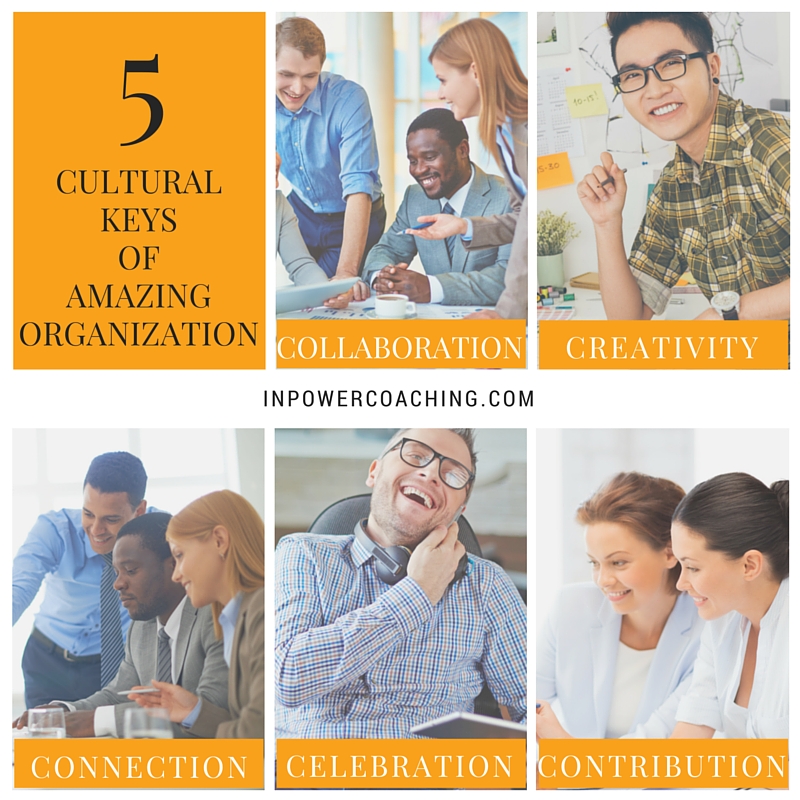
I spoke with Karin Volo, co-author of the book “Engage!” which looks at 15 “amazing” companies who have created enormous levels of engagement. In the book, the authors identified five cultural keys common to these companies. According to Karin, these cultural keys are often driven by a more “female” style of leadership, and often (not always) the culture change is driven by the women in these organizations. Here’s what they are.
Five Cultural Keys of Amazing Organizations
The authors share data that compared to the S&P 500 companies who are among the Fortune 100 Best Companies to Work For have outperformed return on investment by 4x. The 15 “amazing” organizations identified by the authors included companies like Tom’s (the shoe company), Virgin, and Southwest Airlines among others. Here are the five cultural elements they share:
Collaboration – employees don’t just work together, they are vested in each other’s success
Creativity – employees feel heard and their ideas valued
Connection – employees and customers feel connected to the mission of the company
Celebration – employees feel their accomplishments are celebrated and recognized
Contribution – organization gives back and has a positive impact on the community. For example, Tom’s has giving built into the business model (for every pair of shoes they sell they give a pair away)
So what can we do as employees and leaders to create this kind of an environment?
Employees
Take personal accountability for your engagement at work.
Practice daily gratitude to reframe our focus. Look for the three things that are going well.
Every day, recognize and appreciate others who are doing a good job.
Do the inner work to find what you’re passionate about and how to bring more purpose to your work.
Leaders
Ensure that you’re clearly and regularly articulating the bigger mission of the organization
Bring a service mindset – help others bring out the best in themselves.
Love what you do and love the people you’re working with
Instill trust through transparency
In the book, the authors highlight the story of Virgin which took over the management of a couple of underperforming government run railway lines in Britain. They found employees disgruntled and disengaged. The new Virgin leaders did nothing other than start to ask the employees what they thought needed to be done to improve the operations. As the employees felt their ideas heard, they started to engage. They became passionate about their work and operations improved dramatically.
What’s the moral of this story? We must know that we are here to make a difference and so is everyone else. Our state of disengagement is like a temporary but malicious cold we need to fight against. Like our body’s defenses, our passion and purpose resides within us at all times. We just need to make a decision to tap into it. Will you do that?