by Guest Author | Mar 17, 2025 | Commentary, Corporate Culture, Diversity, Gender Equality, InPower Women Blog, Leadership
Key Takeaways:
Workplace discrimination is a mirror, not a point of blame—when we acknowledge our own contributions to the everyday dynamics, we open a curious, compassionate pathway to change.
It takes bravery to notice the moments when we default to the systemic script—whether it’s staying silent, not challenging a microaggression, or unconsciously reinforcing bias.
Being a “reluctant feminist” isn’t about shame—it’s an act of clarity, naming the ways we’ve quietly maintained old norms as a way of protecting ourselves, even when we didn’t believe in them.
Admitting our complicity is not surrender—it’s an invitation to co-create a work culture where reflection, vulnerability, and intentional shifts matter more than perfection.
The point isn’t guilt, it’s growth: leaning into discomfort helps us rewrite our stories—and our collective workplace cultures—to be more inclusive, equitable, and authentically supportive
Note: I wrote this a few years ago, so some of the references are a bit dated, however the content and thinking process was importnat to document. I’ve continued to evolve my thinking in multiple directions, and return to this post to ground me in the beginnings of my explorations. Most of my thinking on these topics is being explored more actively on my InPower Women Substack these days, if you’re interested in following me there.
The lack of workforce diversity affects virtually every business. We need to figure out how to fight the kind of workplace discrimination that creates cultural uniformity in our businesses for two reasons. First, it’s the right thing to do; when more of our workplaces become safe havens for diverse people and cultures, our broader society will benefit. As the Harvey Weinstein debacle has shown us, those who are willing to abuse their power at work perpetuate a broader culture of fear and inequity that ripples through entire industries. Second, as has been shown consistently in research, a truly diverse workforce has riches and returns to offer its shareholders, customers and employees. The bottom line is that solving the workplace diversity problem is good for people and business.
I did not always perceive the challenges of diversity this clearly. In fact, for a long time I didn’t really perceive them at all. It’s become clear to me only recently, that even learning to see them isn’t enough to change them. We have to learn to see discrimination and speak about it in very specific ways to keep from perpetuating it.
Learning to See Workplace Discrimination
I’ve always approached the subject of workplace diversity from a gender perspective, even if a bit reluctantly, and I believe my experience highlights many of the challenges in creating a diverse workforce.
First of all, it’s clear to me in hindsight that I wasn’t able to see through the lens of race because in the decades of my middle management career, I’ve literally never worked with people of color, above, below or beside me. In government affairs, telecom, software and internet businesses where I came of working age, I don’t recall having any black colleagues on the marketing or business side of the house, though we did have a few Asian people in finance. On the tech side of the house, Indian and Asian gentlemen were more common, but not in leadership. Women in tech and leadership were nonexistent, and I can only remember one out-of-the-closet gay man I worked alongside for three months.
Secrets to a diverse workplace: stop looking outside yourself for the answer. – Click To Tweet
Thus my personal experience of distinctions in workplace culture was through the lens of gender. Believing what my bosses told me early in my career, that I worked in an egalitarian meritocracy, I didn’t really look for gender discrimination in the workplace. I wanted to believe the story I was told, that being a woman wouldn’t affect my career. After a decade or so, this perspective was more challenging, as it became clear to me that my gender did impact the professional choices and challenges before me. I got tired of working twice as hard for the opportunity to wield less power and influence. I began to value my family life more deeply as my children grew and I saw my 50+ hour a week job as a counterforce to the balanced life I wanted. I sought a better, more self-directed way, and thanks to the strength of my intentions, I found one.
I didn’t experience my personal journey as “discrimination” when I was traveling its road, but in the last decade, coaching other women, I’ve learned to see some of my own experiences — “trivial” things like being talked over in meetings, and “significant” events such as being excluded from major decisions about my team that were made on the 18th hole — as discriminatory and unfair in ways that eluded me earlier. Listening to others, I also remembered overly personal comments in elevators that had made me feel uncomfortable and unwilling to seek mentoring relationships with powerful men. Once I learned to see these things I used to let slide (or make excuses for), they became clearer acts of bias, preference or outright aggression.
With the benefits of hindsight, I see that I didn’t really have a name for these subtle experiences and thus it’s not surprising that I found them challenging to talk about clearly, even with my female clients. “Discrimination” has a fairly clear legal meaning and many of the things that had happened to me and other women I knew weren’t legally clear. My experiences were ambiguous at best, upsetting at worst, and everyone (including me!) has become practiced at ignoring them or explaining them away as “just the way things are” and “probably just your imagination.” When people tell you that you’re imagining things, you begin to doubt your own experience. I’ve struggled alongside my female clients to try to give voice to the cultural dynamics that keep women out of positions of leadership and influence.
In the recent news about racism, however, I’m finding some useful vocabulary.
With the re-emergence of public discussions about sexism and racism in the news today, words such as “bystander” and “microaggression” give us ways to talk about some of the things that happened to me (and people I know) in the workplace years ago. I’m discovering that, in ways that matter, many of the interpersonal dynamics of misogyny and sexism are identical to those of racism.
This realization is spurring yet another evolution for me regarding workplace discrimination that I’d like to share, in the hopes I can bring you along on my journey to understanding the dynamics of a diverse workforce at a deeper level.
A Personal Confession About Racial Discrimination
While developing a platform to help empower women over the last few years, I’ve struggled with how to support those working alongside me who are standing up against racism, ageism and other forms of discrimination. In particular, I’ve empathized deeply with my black friends as the data about police violence against their brothers and sons has become impossible to ignore. In my public postings, however, on this blog and social media, I always found myself hesitant to click “share” when racial issues are explored. My brain ran with concerns about muddying my personal brand, because I’ve chosen to stand for gender equity rather than a more broad definition of equality.
I hated that I wasn’t comfortable standing with people of color publicly, but I rationalized that I was doing more good focusing on the issue I felt passion about, and about which I have personal experience. Since I require myself to have authentic personal connections to every cause on which I engage, I just couldn’t find my way to an authentic connection with the issues that people of color struggled against.
However, something in me shifted in the conversations after the summer 2017 events in Charlottesville. As I began to look more deeply into the dynamics of racism and research how to be a white ally, I began to see that in ways that matter, many interpersonal interactions that underlie racism are actually identical to the dynamics of misogyny and sexism, against which I’ve taken a clear stand. As I was in the midst of discovering this I participated in a few business workshops where I saw these same dynamics playing out between colleagues in person, across all divides — racial, ethnic and gender. In a conversation after one of the workshops, a young Asian gentleman called me out on my own willingness to lump people (i.e., men) into a bucket unfairly, and suddenly the link between all these forms of discrimination became clearer.
The Secret That Eluded Me: I’m Part of the Problem
As my ah-ha sunk in, the first thing that struck me was perhaps the most important, the most obvious and the most personally disturbing: I was a much bigger part of the problem than I had ever realized, or been willing to admit. It opened me up to deeper questions about my own role in creating corporate culture. I don’t feel that racism or sexism that have come down through history is my fault, or that I am to blame for my black friends’ plight or my own bumps against the glass ceiling, but perhaps I have been complicit in supporting the cultural heritage that made both these things possible in ways I don’t understand? I don’t feel responsible for the sexism that cost my mother her political career, or my great great grandfather’s profit from human bondage, but do I play a role in perpetuating sexist and racist business cultures today? I honestly don’t fully understand the answer to these questions, and as of this writing, I’m deep into these questions.
But here’s what I do understand and want to share, because I think it’s true for almost all of us, white, black, Latino/a, man, woman, African, Asian, European, gay, bi, transexual and any other version of human you identify with: I have been misconstruing the problem in such a way that I can’t possibly be as constructive a part of the solution as I was trying to be.
The problem is not that people have biases, conscious and unconscious, or that people act on them, because we all do. That’s the bottom line of unconscious bias research. The problem is that we don’t know how to talk about these biases in ways that help everyone see them, and explore them in ways that give people room to evolve their biases. The problem is that culturally we don’t know how to address these issues without generating fear and shame on all sides.
Without a space where everyone feels safe, we’ll never find a solution.
And this is where my contribution has probably been strongest. By not learning to see gender, racial and other biases and discrimination clearly in the moment when it happens, by not learning to talk about it in that moment without shaming anyone present, I’ve been a bystander. As a bystander, I’ve inadvertently enabled those who perpetuate discrimination, consciously and unconsciously, to believe it was okay.
And it’s not okay.
Being clearer on the problem, now, I’m going to commit to figuring out how to become part of the solution, to create safe spaces and learn the vocabulary of microagression and microempowerment. I want to discover ways to give people permission to see it and choose what they want to do about it. This is much harder than it looks because the line between microaggression and microempowerment is not only thin, but quite frequently out of our control. Even in a safe environment, it’s a very challenging thing to address.
Look for future posts on the dynamics of bystanderism and microaggression as I explore this. Feel free to share your experiences to help me. If I can figure out how to see and understand these issues, I can do a better job of speaking up in constructive ways. And maybe if I get really good at it, I can bring you along with me. Stay tuned.
Check out our free coaching resources!” and make free coaching resources!
FREE PDF
Guide to Women in Leadership
Executive Coach Dana Theus shares her tried and true strategies to help women excel in higher levels of leadership and achieve their executive potential.
by Guest Author | Mar 15, 2025 | Gender Equality, InPower Women Blog
Key Takeaways:
-
Equality can’t thrive in a culture of blame; shifting from fault-finding to shared responsibility creates space for growth and understanding.
-
Equality is more complex than just fixing individual bias—it lives in the intersection of beliefs, systems, behaviors, and culture, and must be addressed holistically.
-
Male engagement is essential for true equality; when men withdraw out of fear or discomfort, opportunities for learning and connection are lost.
-
Asking better questions—about how we treat, promote, and perceive each other—moves us closer to equality by challenging assumptions and opening minds.
-
Lasting equality depends on collective curiosity and courage, not finger-pointing; it invites all of us into the work of changing how power and opportunity are distributed.
Have you ever heard of Women’s Equality Day? It’s August 26th. I’m glad that this day exists. It commemorates the game-changing moment, 95 years ago today, when women gained the constitutional right to vote in the US. It’s important to celebrate that and to remember that there are still many women in the world without a political voice.
But I’m also sad that there’s a Women’s Equality Day, because it confirms that true gender equality still eludes us. Whether it’s a moral issue or a business issue for you, equality matters. And it’s painful to confront the distance we have yet to travel.
As we connect with our disappointment, it’s tempting to assign blame for why things are the way they are. But in my experience, blame doesn’t get us anywhere we really want. Why? Because it slams shut the possibility for change. While blamers are finding fault, blamees are attacking back or running for cover. Meanwhile, nobody’s learning. And if nobody’s learning, nothing’s changing. As one male client, who cares very much about gender equality, said to me:
I live in fear of saying the wrong thing and being labeled an insensitive jerk. So I disengage; I stay quiet instead of speaking up; I play it safe and keep my distance.
Even this man, a staunch believer in women’s equality, shuts down for fear of incurring the blame blowback of ‘getting it wrong.’ That means that he doesn’t engage, doesn’t grow and doesn’t work for change. And yet research tells us that we need men to engage to make progress.
How do we confront bias against women (and other so-called minority groups) in such a way that opens up mutual understanding, accountability and action? I think we start by changing how we relate to bias itself: not so much as someone’s fault, but rather as a shared phenomenon in which we’re all participating. It’s not that there isn’t fault to find; it’s just that fault-finding doesn’t seem to get us anywhere.
Bias is the result of a convergence of both personal and systemic influences:
- individual beliefs and values
- individual behavior
- culture: collective values, mindsets and patterns of behavior
- structures: the policies, laws, physical and organizational structures, media, etc. that we build to carry out what the culture values
These influences interact dynamically, continually affecting and being affected by each other. After years of history and habit, these influences weave tightly together to form very solid social patterns. Some of us benefit from those social patterns and strive, consciously or unconsciously, to keep them intact. Others of us aren’t well served by the patterns and we rail against them. And as we’re protecting or railing, it’s natural to fault each other for being oppressors or malcontents.
… As if the mud-slinging will help. As if the problem lies only in our personal shortcomings. As if the solution were that one-dimensional.
In the quest for gender equity in organizational life, the questions are larger than “Whose fault is it?” And the stocktaking needs to be done by men and women alike. Based on the four influences above, here are some questions that we can engage in together to examine and shift the complicated phenomenon of bias.
Personal beliefs
- Are there certain behaviors that I tolerate in men that I recoil at in women? Or vice versa? What do those differing reactions tell me about what I deem “OK” and “not OK” from each gender?
- How does that impact my openness to people as they are?
- Do I ever expect more or less from women than I do from men? If so, what assumptions are driving the difference in my expectations?
As a result of this inquiry: Which of my beliefs and assumptions most inhibit a fuller openness to women, and how can I start challenging those beliefs?
Personal actions
- Are there women that I could or should be advocating for that I don’t? Why don’t I?
- Have I ever shied away from giving a woman feedback that might have helped her succeed? And if I did give feedback, was it specific and behavioral enough to enable her to take clear action?
- Who tends to sway my opinions and thinking most often? Is there a gender dimension to who I listen to and don’t?
As a result of this inquiry: What one or two things can I start or stop doing to more actively support the women I live and work with?
Culture
- Are there customs, events or practices in our organization that women don’t seem to attend or fully participate in? Might that indicate that these practices are exclusionary in some way?
- Do we use language or ways of communicating that might exclude women or make them feel uncomfortable? How would we know?
- When women have raised concerns about how they’re treated, how quickly or consistently have we taken action to address them? Have we given negative labels to women who have expressed their discontent?
- Who are the formal leaders and informal power brokers in our organization? If women are sparse there, what might that tell us about the exclusive nature of our culture’s values?
As a result of this inquiry: What one or two of our patterns of collective behavior most work against a level playing field for men and women? What new patterns do we want to establish? How will we hold ourselves and each other accountable?
Structures
- Do any of our employment, promotion, performance management or development practices make it harder for women than men to excel or advance?
- Have we established mechanisms to measure whether men and women experience this organization differently?
- Are more women than men leaving the organization? If so, what do they tell us in their exit interviews? If they say it’s “Too late” to give feedback, what were the signals that we missed along the way?
As a result of this inquiry: Which of our practices and policies seem to create barriers to women’s success? How should we update those practices to support an equality agenda? How do we ensure that our structures are continually updated to reflect our changing cultural values?
Blame is the quickest way I know to stop the journey toward equality. By looking at bias as a shared phenomenon, rather than as someone’s fault, we can step out of the fray and get curious about our patterns of interaction. Perhaps then we can look at bias together, without finding fault, and martial our collective creativity toward the equality that most of us really want.
FREE PDF
Guide to Women in Leadership
Executive Coach Dana Theus shares her tried and true strategies to help women excel in higher levels of leadership and achieve their executive potential.
by Dana Theus | Mar 13, 2025 | Corporate Culture, Leadership
Key Takeaways:
- “Signs of a Toxic Boss” go beyond isolated frustrations—they paint a picture of leadership that’s self‑centered, emotionally reactive, and ultimately corrosive to trust and authenticity.
- Toxicity often creeps in through ruthless behaviors: unrealistic deadlines, favoritism, hoarding information, and belittling criticism—all symptoms that erode team morale and drive people away.
- Leadership culture can push good people away—many avoid the climb entirely because they fear success must come at the expense of their values and kindness.
- True executive success isn’t about “whatever it takes”; it’s about refusing to relent. Leaders who hold fast to authenticity—even when pressure mounts—can model healthy, collaborative success.
- The path isn’t easy, but what makes leaders remarkable is perseverance: keeping faith that there is a way to lead with integrity, empathy, and high performance—even in a culture that may reward the opposite.
I can’t tell you how many clients come to me with what they understand to be antithetical desires: executive success and authenticity. They’re very aware of the signs of a toxic boss and they don’t want to be that. They hope I can help them figure out how to be authentic, supportive of their team and successful at reaching the top even though they are not completely sure doing all that is even possible.
Their uncertainty is surprising considering how many leadership books promote authenticity, collaboration (and the trust that results), as critical to every level of success—especially the top jobs. However, as we know, many leadership cultures tolerate and even support toxic leaders, so these concerns are not unfounded.
Photo by Brett Jordan
Signs of a Toxic Boss
Even more perplexing is that over the course of my career I’ve observed that many of the best people opt out of top roles, or the desire for them, because they believe the only way to get to the top is to do “whatever it takes” and exhibit signs of a toxic boss:
- Self-centeredness somewhere on the narcissism scale
- “Us-vs-Them” competitiveness
- Unrealistic expectations and impossible deadlines
- Favoritism based on personal loyalty
- Dictatorial decision making
- Information hoarding
- Emotionalism and reactivity
- Lack of feedback or recognition
- Unactionable negativity, criticism and belittling
- Disinterest in others’ ideas
- Blaming and shaming others
- No accountability for themselves
- Taking credit for others’ work
- Unwillingness to consider ethical issues in decision making
- Demanding 24 hour access to employees and face-time at the expense of personal productivity
When deciding whether to climb to the top, many believe that doing “whatever it takes” to get to the executive suite means becoming the kind of person they hate. Given this choice, opting out of the climb makes a lot of sense.
After observing many leaders, I believe that success at the top doesn’t mean doing “whatever it takes.” Instead, I believe it means, “never giving up.” Even in a culture that tolerates toxicity, there are authentic ways to succeed, and in doing so create opportunity for change.
But to start this journey, we have to reimagine what it can look like for authenticity, healthy and collaborative managerial relationships, leadership and success to coexist at the executive level, where the pressure of survival (personally and for the business) can incentivize toxic behavior.
Keys to executive success: replace a “whatever it takes” mindset with a commitment to “never give up.” ⇐=Click to Tweet
Never Give Up: Rethinking the Executive’s Job
At its core, business is an inherently competitive game to access limited resources and produce profitable outcomes. While an abundance mindset in playing the game is healthy and breeds collaboration, at the end of the day customer and stakeholder resources are not unlimited.
It’s the job of the executive suite to set priorities, direct resources and make decisions that enable the organization to survive. The survival mandate of the top jobs too easily leads to an “ends justifies the means” mentality that makes it easy to excuse, allow and reward all the signs of a toxic boss: whatever it takes.
But the most inspiring, motivational and successful leaders are playing a different game, which is not just to survive but also to thrive. Instead of believing they can only succeed at productive ends or healthy means, they believe it’s possible to succeed by creating healthy ends and means. They recognize that this is a more challenging task and requires skill at balancing dynamics which are naturally and paradoxically in tension:
- Competitive and cooperative mindsets
- Relationship-building and task-focused activities
- Big picture vision and detail oriented skills
- Business success and personal wellness
- Confident, visible and humble leadership
- Empowering others and being accountable
This is difficult work and harder than simply surviving at any cost. At first the path forward can seem impossible, but the best leaders never give up in finding the way to “both/and” success. They play the game to win and bring as many people into the winning as they can, without allowing themselves to fall victim to exhibiting signs of a toxic boss. Specifically, what these leaders never do is be:
- Unfocused/unprioritized
- Emotionally reactive and triggered
- Disrespectful of limitations
- Negative and cynical
Accomplishing the Impossible
To some, succeeding in the “never give up, both/and” model described above seems either impossible or too exhausting, particularly if they work in an organization where the signs of a toxic boss run rampant. Burnout is a thing. It’s one thing to never give up and it’s another to bang your head against a wall that refuses to move. But somehow the best leaders find a way. They never give up looking for the right opportunity, somewhere, to lead authentically. And somehow, they always find it.
Join us in the Women’s Mastermind to explore what “rethinking the executive suite” looks like for women in leadership.
Ready to invest in yourself?
FREE Executive Coaching consultation with Dana Theus
by Guest Author | Mar 11, 2025 | People Skills
Key Takeaways:
- “Negotiation tactics” aren’t about winning at someone else’s expense—they’re about discovering the solution nobody expected but both of you can smile about. (Inspired by Dana’s emphasis on “surprise win-wins.”
- A powerful negotiation begins with curiosity—ask yourself what’s really needed here, and don’t stop until you’ve uncovered the deeper opportunity lurking beneath the surface. (Inspired by her use of the “5‑Whys” method.
- Go in knowing clearly what matters to you—and then step into their shoes to help them win, too. Shared language and empathy are the secret ingredients of purposeful alignment. (Drawn from her win‑win guidance in job crafting).
- Silent space in negotiation isn’t awkward—it’s fertile. Lean into pauses and give others room to fill them—often they give you more than you hoped for. (Echoes integrative negotiation insights around thoughtful pacing.
- Don’t rush to closure; instead, lean toward options that surprise—you and them—because the best agreements often hide in the shadows between positions. (Built on her insight about the elusive win-win lurking off the obvious path.
You might not know it, but you negotiate all the time. We all do. Our negotiations might be small or insignificant, such as negotiating with your roommate or partner which chores you will own each week. Some are quite significant, such as negotiating the terms of a year-long contract with a client or negotiating the purchase price of someone’s next home. The higher you go in your career, the more negotiation tactics become a business-critical career skill to master.
Regardless of the negotiation situation, get in an executive mindset, out of the weeds, and into a strategic view of your goals. Try to negotiate from a cooperative perspective (win-win) rather than a competitive one (win-lose). Use the tips below to help you and your negotiating partner find a fair deal that builds as trusting a relationship as possible.
Use Affirming Language
When you negotiate, use positive language as much as you can. Affirming language is simply saying what you mean in positive terms and sharing what you understand the other person has told you. By using affirming language, you’re helping to make your negotiation partner feel heard and valued. Here are two examples of how to use affirming language when negotiating.
- “I appreciate everything you have offered, especially [example concession they’ve made], and I’m glad you like [example concession I’ve made]. Would you be willing to include [request]?”
- “I understand you’re wanting X, Y, Z, correct? If this is true, I’m happy we can give you X and Y, but unfortunately, we cannot do Z for [reason].”
Again, affirming language will make the other negotiator feel heard, and further perpetuates a positive and friendly tone rather than setting up a competitive framework.
Don’t Make the First Offer
During negotiations, try to not make the first offer or be the first person to state a number. According to one study cited and discussed by Harvard’s Program on Negotiation, MBA students were to negotiate a single-issue price deal and record who made the first offer, the amount, and the deal outcome.
Afterward, the MBA students were asked about their emotional state. The negotiators who made the first offer often felt, “more anxiety than those who did not,” and were “less satisfied with their outcomes.”
If you’re pushed to state a number first and you don’t feel comfortable doing so, try to put your numbers in context using the phrases below:
- “I would like more information about X, Y, Z before making a specific offer.”
- “We can do a range of XX amount to YY amount. What factors would affect whether the number is at the higher or lower end of this range for you?”
FREE PDF
Guide to Women in Leadership
Executive Coach Dana Theus shares her tried and true strategies to help women excel in higher levels of leadership and achieve their executive potential.
How to Defer Stating a Number During Salary Negotiations
Making a counter offer is especially key during employment interviews or a performance review where a salary increase is on the table. Early on in my career, I was unprepared to answer the salary question and usually fumbled by requesting a salary too high or too low.
From interviewing for over a dozen jobs, I now expect the salary question to occur at the end of the initial interview. The reason companies request your salary expectations during the first-round interview is because they want to make sure you are both in the same ballpark. But this first salary conversation is not the time to negotiate. Negotiating an actual salary agreement is appropriate once you’re offered the job.
I also learned to use Glassdoor to see salary ranges at companies I applied and interviewed with. When asked the salary question I would follow these steps:
- Ask for the position’s salary range
- Ask what that range is based on if not explained by the interviewer
- Inquire into where they saw me landing in that range (i.e. an actual figure.)
- Depending on my experience and the offer I would either agree to that number or ask for a higher salary.
Tip: It’s important to know what your minimum compensation package value must be so you know when and why to walk away.
Tip: It’s important to ask for a higher salary than the number they give you (if you truly believe you’re worth that extra pay) because otherwise, you will never know if they were prepared to pay you more. Reasons you could be worth a higher number could relate to your experience or your ability to bring something new to the company or team. Ask for more and be prepared to negotiate.
Check Your Body Language
When discussing the details of a deal or terms, you want to meet in person as much as possible. Given the ongoing pandemic, meeting in person might not be an option. Therefore, try to meet over video conference or over the phone to get a read on the other party’s facial expressions and voice — therefore their overall sentiments.
When negotiating, you want to be acutely aware of your and the other person’s body language and facial expressions. It is also recommended that you make note of your own voice and tone, even if negotiations are going well. For instance, try to smile when speaking. Smiling will change your vocal cords — which will make you sound and appear more earnest and friendly.
Know what the below movements signify:
- Crossed arms typically means someone is defensive or agitated.
- Leaning back in a chair can signify confidence, and in some cases, a way to show dominance.
- Hands-on one’s hips can mean control or confidence in the situation, but it can also be a form of aggression particularly if they’re physically close to you.
- The tapping of fingers often indicates impatience or frustration. If this is occurring, they’re probably thinking of their response rather than what you’re saying at the moment.
When I am negotiating or even speaking to someone else in my professional and personal life, I try to be cognizant of my body language first and how it might make the other person feel. I also closely observe their body language and facial expressions when I bring up a new or important detail to interpret their reaction.
Research Your Options
Make sure you have done a thorough amount of research and know the deal, contact, or whatever is being negotiated to the best of your ability. Nothing will irritate the opposing party other than having to explain a key detail to you which they have reason to believe you would understand. You also don’t want to be caught off guard, which will decrease your leveraging power.
Stick to Your Bottom Line
This might be the most important tip of all, but make sure you (1) know your bottom line and (2) stick to it. Again, do research beforehand so you know what your walking away point is, but if you go past what you’re comfortable with you might have buyer’s remorse or feel taken advantage of.
A good rule of thumb is to have a couple of backup plans and to know what you’ll do if you can’t negotiate a deal. This makes the negotiation easier for you because you know that if their best offer is better than your plan B, it’s probably a pretty good deal! If it’s worse than any of your backup plans, don’t take the deal. And if something new gets brought into the equation you didn’t consider, take a moment to consider it—especially if it’s better than your plan B.
Look for the Easy Thing for You to Give
You’re going for the win-win, remember? There’s probably at least one thing, or a few things, that are important to your negotiating partner that doesn’t matter much to you. Figure out what these things are. Use the negotiation dialog to verify that they are in fact (1) important to the other person and (2) not important to you, and then give them away. This helps build trust with your partner that you really do want them to feel a “win” from this negotiation too. And it’s easy.
In summary, to have a successful win-win negotiation where both parties walk away satisfied, try to use affirming language to keep the energy positive. Also, be highly conscientious about your and the other negotiator’s body language and facial expressions. Finally, try to not make the first offer, and if you do, make sure you have a solid backup plan. Remember to give away things that are meaningful to them but easy for you as this builds trust in the process.
Photo by Anna Shvets from Pexels
Author: Chi Whitley
Position: Junior Content Marketing Specialist
Author Bio: Chi is a content marketer and blog writer based in Austin, TX. When he’s not creating and writing SEO-backed content, you can find him outside with his dog, Augie.
FREE
Confidential Access: InPower AI Advice
3 AI Coaching best practices, 10 Use Cases, and 62+ AI Prompts to make you better at working with humans [PDF Download]
by Guest Author | Mar 9, 2025 | Across Generations, Coaching Advice, EQ & Soft Skills Research, Insights & Inspiration, People Skills, Personal Mastery
Key Takeaways:
- As a senior executive, simply telling yourself you listen isn’t enough—true leadership begins with patient listening that deeply seeks to learn and understand, not just solve.
- In our rush and multitasking world, the best of us fall prey to distraction—our devices seduce us into half-listening, so slowing down and truly being present matters more than ever.
- It’s courageous and essential to lean into tough conversations—ignoring difficult issues erodes respect, trust, and the relational foundation your team needs.
- Make space for real conversations where listening takes up 80% of the airtime—don’t just speak to be heard, listen to truly connect.
- Follow-through matters—picking up the phone instead of hidden behind emails, keeping commitments, managing your inbox intentionally, and owning your priorities are what make your leadership credible and authentic.
What key skill should every senior executive (and anyone aspiring to be one someday) master? The art of listening. John helps us understand why this is so important. How can you improve your listening skills this week? (We all can!) – InPower Editors
Several people asked me recently what the most common goals of my clients are.
When I explain that patient listening, that is, listening to learn and understand, is probably the single most common, many seem surprised. It’s true though. While everyone seems to think they are an attentive listener, few of us really are.
Why is this so often the case? First, most of us tend to have problem solving minds, we do not focus on what a person is saying, what she may not be saying, and her feelings.
Second, we have shortened attention spans. The instant news environment has affected us, and we can’t keep focus long. For example, I’ve noticed that in meetings, after just a few minutes, people are looking down at their lap – where sits their smart phone. They are half listening while they read texts. And I must admit, I am so inclined myself.
In addition to lacking focus, we are too busy in general. We spend too much time at our computer, looking at our smart phone, or using our iPads when we’re with other people, often so that we can multi-task and get more done.
As I was thinking about common client goals, such as the patient listening, and how I might be more effective as a leadership coach, I composed a wish list for my clients, friends—and myself to address these goals head on.
- Improve our ability to listen attentively, to learn and understand.
- To slow down, disconnect from all the busyness and connect with the person(s) with us. Walk the halls, ask how people are doing, ask for their ideas, ask what help they need, and thank them for all they do.
- To address issues, the difficult ones. We lose the respect of our team members when we permit negative energy to continue.
- Have more conversations, real conversations. Share our thoughts and feelings, and invest 80% of the conversations in listening, 20% in speaking.
- Follow up and follow through; do what we say we will. Address our priorities.
- Pick up the phone, make calls. Realize that connecting is not nearly as effective via email and messaging.
- Gain control of our emails, not letting them control us by having us worry about what we’re not doing or what we are missing, or should we be whenever we are now. Learn an effective system that works for you.
There’s one more important goal for my wish list. Many people with whom I work tell me they feel they would be so much more effective if they had a greater sense of inner confidence, that they are sometimes in situations where they are hesitant to speak up, to share what they really think, and that is very limiting. I totally agree with this need. The number of the people with whom I am privileged are so talented and capable and yet do not accept that about themselves, that they are true leaders already, just as they are.
Originally on: Common Sense Leadership
candid insights and soulful partnership
by Guest Author | Mar 7, 2025 | Coaching Advice, Dear Dana (Workplace Advice)
Key Takeaways:
-
“Interview advice”: before you even schedule a conversation, ask yourself whether it’s worth the time—for you and for them—because preparing for and attending an interview takes focus, time, and energy.
-
Doing an interview you don’t intend to take can unexpectedly boost your confidence, bring clarity to what you do want, and jump‑start your job‑search mindset.
-
You may feel ethically off‑balance if you pursue an interview you don’t care about—and you risk burning bridges with both the organization and the friend who referred you.
-
Use the opportunity to articulate exactly what does light you up—when your network hears your enthusiasm about a clear goal, they begin pointing you toward truly meaningful opportunities.
-
Decline gently by explaining what you are actually looking for—and if they still invite you in, use that conversation not out of obligation but out of curiosity to see whether your assumptions hold true.
Dear Dana,
Last year I got rejected for a transfer in my company that I applied for. I was proud of myself for going to the team leader who rejected me (and who I’ve known outside work for a few years) to ask why they turned me down. He told me that the person they chose had more relevant experience and that it wasn’t a rejection of me as much as a decision to hire the exact skills they needed. I was okay with that but then he said something else that confused me. He said I should be more confident in my interview. He said “I know you. You’re more than what you do. Be sure that comes out when you interview.” I didn’t really think to ask him what he meant when he said it, but afterwards that comment stuck with me and I don’t think I understand what he meant. On one of your recent webinars I heard you and Shira say this too. “You’re more than what you do.” So I thought I’d ask you to explain because I don’t think I’m getting it and I need some interview advice for another opportunity I’m applying for. – Confused in Connecticut
Dear Confused, THANK YOU for asking this question. I have to admit that I didn’t always understand this idea either. Earlier in my career I also thought my value was only a function of my skills, capabilities and accomplishments. It frankly wasn’t until I became a coach that I really tapped into the wisdom of this, and now I try to help all my clients dig down to understand their value beyond the “basics” you can easily bullet list on a resume. Appreciating these “more than what you do” aspects of your value is a critical first step to being intentional about your personal brand, too, so thank you for giving me the opportunity to break it out.
You know there’s more to you than just what you can do at work, but if you’re like I was, you don’t understand how those other parts of you bring value to your employer. Once you understand the employer value pieces, and incorporate them into your professional brand identity, you’ll be able to “bring them to your interview” and stand out from other candidates because of it. So, let’s look at some of the obvious places, and maybe we can continue the discussion in the forums because everyone should have an appreciation for their personal brand values beyond just what they can produce.
TALENT
I have a client who has a team member that drives her nuts. She could talk for a long time about how often this person drops a ball. However, she’s also aware of several key talents the person has for account management and troubleshooting some of the most difficult relationships the company has to manage with large customers. This might show up on a resume as “relationship management,” but my client describes the person’s talent as “almost magical the way they can soothe the savage beast.” To my client (the person’s boss) this talent, which she describes more as a “relationship whisperer,” is extremely important to helping meet revenue goals that involve losing large contracts.
The problem is that this person doesn’t fully appreciate the financial value to the company of their “relationship whisperer” talents. The person thinks their value is just that they’re well-liked (I guess assuming that if people like them, they like the company?). They also don’t appreciate that they have to be able to do other things that deliver value to the company and that they need to expand their personal brand reputation to being a “relationship whisperer who exceeds revenue goals.” I’m coaching my client through trying to help this person become more appreciative of why their relationship whispering talents are valuable to help them use these talents and also learn new skills that will allow them to add “revenue generator” to their personal brand to be the complete package.
Shira calls these almost-magical talents “superpowers” for a reason. It’s great advice to take your superpowers to your interview!
PASSION
Here’s some starter interview advice: What do you enjoy doing most? How do you bring that interest to work? How does it help you produce results? When you get clear on these things you’ll learn to speak about your passions in ways employers can appreciate.
I had a client once who had a real passion for sustainability issues. Her long-term goal was to work for a “green” company. But her passion initially led her to manage a volunteer working group on how the company could reduce their waste and carbon footprints. Although her “day job” was in marketing, this “volunteer” sustainability leadership put her in proximity to the CEO who learned to appreciate her skills (the ones I was helping her develop!) for gaining consensus among senior executives. The CEO asked her more than once to play a lead role in several executive-level marketing initiatives because he knew she could be successful leading the executive team to a decision. This raised her visibility in the marketing group too, and helped her get a small promotion.
I was glad to help her gain this visibility, but her passion really folded into her personal brand fully during a job search later where she was able to use this experience to demonstrate during interviews to a new green employer:
- How her passion, interest and experiences in sustainability were genuine
- That she could perform and deliver results beyond her immediate responsibility
- How she could influence at levels beyond her job title (i.e., that she had “boardroom presence”)
You may have passion for things that seem disconnected to your job, but when you take a step back, you can usually find some threads to pull them together when you look at them through the right lens. You can use your personal goals to help you do this.
PERSONAL GOALS
You probably have personal goals totally unrelated to your employer or career. I encourage you to find some that align strongly with your employer’s interests and make sure those are on your professional development plan. You want to do this for reasons related to your current job and for future jobs as well.
In your current job, you’ll personally be more motivated if you see what portion of your job is refining skills and abilities that will help you get to your future career goals faster and with more confidence. Your experience today helps you prepare for tomorrow, so be intentional about it. Also, let your boss in on those personal goals you have that s/he can help you develop (because it benefits the team, too.) Another client of mine was pleased to find that after she told her boss about some of her personal goals (managing more people, for example), her boss started sending her projects that were more aligned with her desires and is giving her a new direct report to help her fulfill her desires. You never know until you ask whether there is more your boss/company can do to help you achieve your goals.
How do your goals benefit the company? Primarily, your boss needs to know what you’re most motivated to do and what might lead you to overachieve. In an interview you need to find out if your goals and the team’s goals are aligned enough for you to feel fulfilled at that job. When you see alignment, you can genuinely let your interviewer know that you really are able to get behind the team’s goals because they’re personally important to you. When they see that you make a personal connection to the company goals it is a strong point in your favor.
CULTURE FIT
During an interview, part of your goal is to learn more about how your talents, passions and goals fit (or don’t fit) with the organization you’re thinking about joining. A good interviewer will also want to know this. Even a bad interview will feel the synergy if you’re good at communicating your personal brand in ways that make the presence of a good culture fit obvious.
The point is that you need to understand and appreciate these things about yourself first, before you can communicate them effectively during an interview. This is hard for most of us (really, even coaches can find this challenging.) And helping you see yourself and your value beyond what you put on your weekly status reports is something that coaches are typically really good at. If you know you need a clearer view of yourself “beyond what you do,” why not talk to a coach?
Because it’s true. You are much much more than what you do and when you help a potential employer understand it you can reap the rewards in both personal fulfillment and compensation.
————–
Need help writing your accomplishments for your resume or LinkedIn profile? Download our worksheet for tips, fill-in-the-blank guidance and examples! Get a BONUS personality assessment too!
FREE
Confidential Access: InPower AI Advice
3 AI Coaching best practices, 10 Use Cases, and 62+ AI Prompts to make you better at working with humans [PDF Download]
by Guest Author | Mar 5, 2025 | Coaching Advice, Corporate Culture, Emotional Intelligence at Work, Leadership
Key Takeaways:
-
“Bosses don’t listen” isn’t just your frustration—it’s a documented pattern: the more powerful the leader, the less likely they are to heed advice, and that growing infallibility makes everyone anxious and decision‑making worse.
-
Too much deference to a boss’s power can disguise their fallibility, so you end up trusting them when challenge might actually be the tonic.
-
It’s not just about them: leaders have responsibility too—ignoring advice isn’t a trivial ego quirk; it’s a cultural liability that damages organizational health.
-
This dynamic reveals why emotional intelligence matters—even powerful leaders need to stay open, humble, and receptive to dissent if they want smarter decisions.
-
Recognizing this pattern gives you a strategic edge—you can learn to offer advice effectively, support wiser leadership, and create a safer space for healthy pushback.
And you thought it was just you
Research shows that the more power(*) a manager or leader has, the more likely they are to ignore advice. Does this describe your boss? We’ve all had them.
To some extent the findings in this research–that powerful people listen less to others’ advice–makes sense. I mean, from their point of view, being rewarded with powerful positions means they must have done something right, right? And if they’re doing something right, why not trust them?
We can all see the fallacy in this logic taken too far. While trusting them to the point of never challenging them can mitigate conflict, it can also contribute to the ego-centric leader’s sense of infallibility, even when they are making mistakes. This leads to all kinds of bad stuff, including poor decision-making and too much anxiety for everyone else.
Why It’s Not Just About Them
Here’s why you should care if you have any leadership responsibility in your organization.
The price paid for these powerful people who ignore advice shows up in shareholder value. Bosses who ignore input or actively run around shooting messengers quickly grow out of touch with what’s really going on with customers and employees; they just aren’t as innovative as those who are willing to take advice from others.
Think of all those good ideas dying unspoken. This is a liability for the company, but it’s also too bad for you if you’re one of those intimidated into silence. And you don’t need to be silent if you know how to challenge powerful people respectfully and skillfully. I know from personal experience, research and client work that when you know how to speak up effectively, you can definitely leverage this skill to get ahead.
Why Not Take The Ignorance Perk?
But why work so hard? Maybe ignoring the problems you can’t fix is a way to get ahead, like the bosses who have obviously done it. Um… maybe. I mean, it does seem to work for some of them. But then again, it’s not unusual for the mighty to fall because they missed an important clue, or simply were too brazen to hide their bad behavior. I can guarantee you that for every executive career that goes down in flames, from shareholder disasters to the #metoo (really) bad boys, there was some right-thinking people in their group trying to save them from themselves.
Ignoring the good counsel of others – and your own voice of conscious – is a risky business and the higher you go the farther you have to fall.
And if the research is right, a whole bunch of powerful people are out there risking a lot right now. Just think about how competitive you’ll be if you succeed by listening to the wisdom of others, adding it to the power of your own wisdom. Getting ahead and staying there is risky enough without taking this kind of stupidity risk, isn’t it?
So you want to pass up the ignorance perk and choose to get ahead? Here’s a little executive coaching on what you can do:
- work on yourself to remain open to new ideas while you move up the ranks;
- mentor those below you not to let success shut them off to others’ input; and
- speak your truth to your own bosses, even if they don’t want to listen.
I know it’s not always easy, but it can and is done by good leaders all the time.
Do you have the emotional intelligence skills you need to be open to the input you need to succeed? Do you have a terrible boss who doesn’t listen to your ideas? Are you ready to transcend your short-sighted bosses and rise to a new level of leadership? Whatever your goals, don’t give up on them. You’re not alone in wanting to lead from a place of innovation and purpose.
InPower Women’s Mastermind
We don’t Mastermind your business. We Mastermind YOU!
by Guest Author | Mar 3, 2025 | Career Development, Coaching Advice, Innovation
Key Takeaways:
-
The robots are coming Whether they’re steel, software, or smart algorithms, robots are already reshaping white‑collar roles—and middle managers must begin preparing now for a future where machines handle analysis, prediction, and many decision‑making tasks.
-
Robots don’t eliminate the work—they change the nature of it. As machines take over routine, data‑driven tasks, humans will need to focus on what only people can do: coaching, empathizing, collaborating, and leading transformation.
-
The rise of automation in finance—such as investing bots and predictive analytics—puts typical middle‑manager responsibilities like asset oversight at risk, with analysts and asset managers projected to see significant job displacement.
-
To remain indispensable, managers must become fluent in digital tools and data—getting comfortable working alongside AI and bots while developing soft‑skill leadership that machines simply can’t replicate.
-
The opportunity isn’t doom: professionals who adapt by up‑skilling and embracing hybrid human‑AI workflows can stay ahead of change, turning disruption into a catalyst for career growth rather than obsolescence.
Yes, the Robots are coming, and they’re (probably) going to change how you manage people. Have you noticed that the buzz about artificial intelligence (AI) and automation has been picking up? I watch the tech space pretty compulsively and for years the dreamers would talk about how we’d all be downloading our souls into androids by 2050 and everyone else has been saying… no, that’s just a dream.
Then an AI named AlphaGo Zero happened. Without any programming on how to play the challenging game of GO, humans taught AlphaGo Zero the rules of the game and gave it the instruction to win. From knowing nothing to beating the world’s top players, AlphaGo invested a mere 40 days of practice, and along the way introduced some moves that upended centuries of human GO wisdom and strategy. Then ChatGPT. Then, everyone is advertising AI in their solution.
These breakthroughs in machine learning and large language models at the leading edge demonstrate the huge leaps automation is in the process of making, thanks primarily to advancements in big data and the processing and storage of digital assets. Whereas a few years ago I would have told you that the experts were saying such advancements wouldn’t mean major job changes for most office workers, today I’m telling you the experts are saying that almost every job will be affected in the next decade, if not sooner.
White Collar Jobs Are Feeling The Effects
Over the last twenty years, basic robotic technology has allowed tireless machines to continue and speed up the production of many things humans do, more slowly and with greater error. For the most part the impact has been felt in so-called “blue collar” manual and physical labor jobs (like manufacturing) more than in “white collar” knowledge work (like stock trading). In fact, research shows that job losses in the US have resulted more from such automation than from outsourcing and trade with lower-labor-cost nations like India and China.
Most white collar workers, both individual contributors and managers, took some comfort in this trend, feeling that their jobs were safe, but ChatGPT is beginning to change all that.
It turns out that the “robots” our researchers have been brewing in the last decade are not all made of steel and plastic. As knowledge work has become “work”, requiring productivity enhancement, our advances in software development AI–LLMs–have also made automating jobs that include tasks such as analysis, decision-making, problem-solving and processing more common. What this means is that what happened to factory workers a few decades ago is now happening on Wall Street and in many corporate offices.
Here’s a case in point: Wall Street Asset Managers. Asset managers are the people who mind your assets. They work for investment banks, wealth management companies and large corporations, i.e., anyone who has a lot of assets to manage. They pay attention to the value of the assets and what they’re needed for, and they make recommendations and decisions on when and how to buy, sell, lease, refurbish or destroy those same assets in order to achieve financial and other objectives. There’s a lot of information gathering, assimilation and analysis involved, as well as decision-making. While a company that leases tractor trailers has to physically go out and inspect the equipment, most of the relevant information for Wall Street asset managers is in digital form.
Maybe you can see where this is going. When the assets are digitally visible, smart software algorithms capable of mining big data to predict outcomes are faster and arguably more effective than human beings. They’re also much less expensive to deploy than humans who need offices and health benefits. As a result, in 2025, companies are starting to lay off employees in response to AI-generated productivity.
The begs an important question: will be out of a job? No! Historically, the job market has always shifted and changed to adjust to new technologies and market needs (see below).
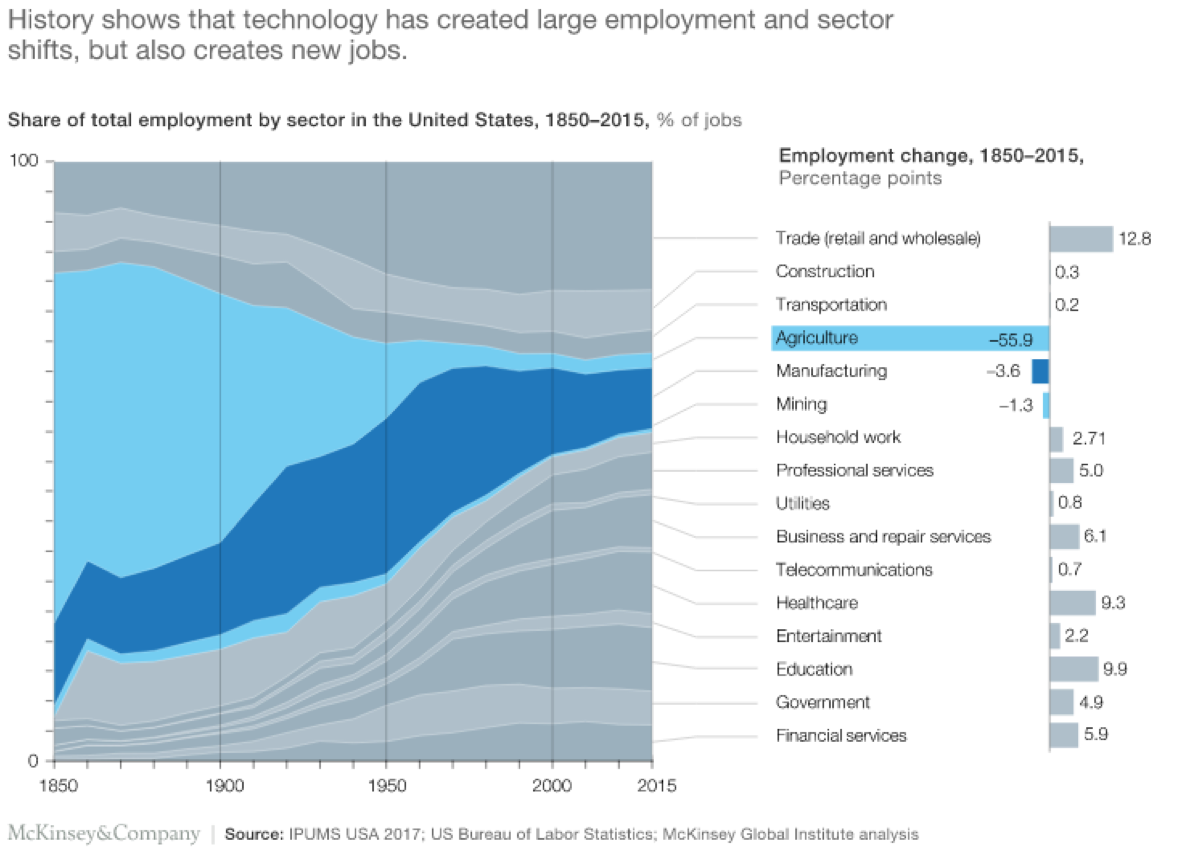
However, to stay ahead of the curve on these kinds of market shifts, you need to start thinking about how you produce results using both human and automated team members. It’s true that you’ll need to become more digitally savvy to manage the machines, but equally important will be your human skills. As the bots start to take over more and more analysis, prediction and data-based processes, the humans have to get better at doing what only humans can do. For leaders this means honing your soft skills to lead, manage and inspire the other humans you interact with on a regular basis.
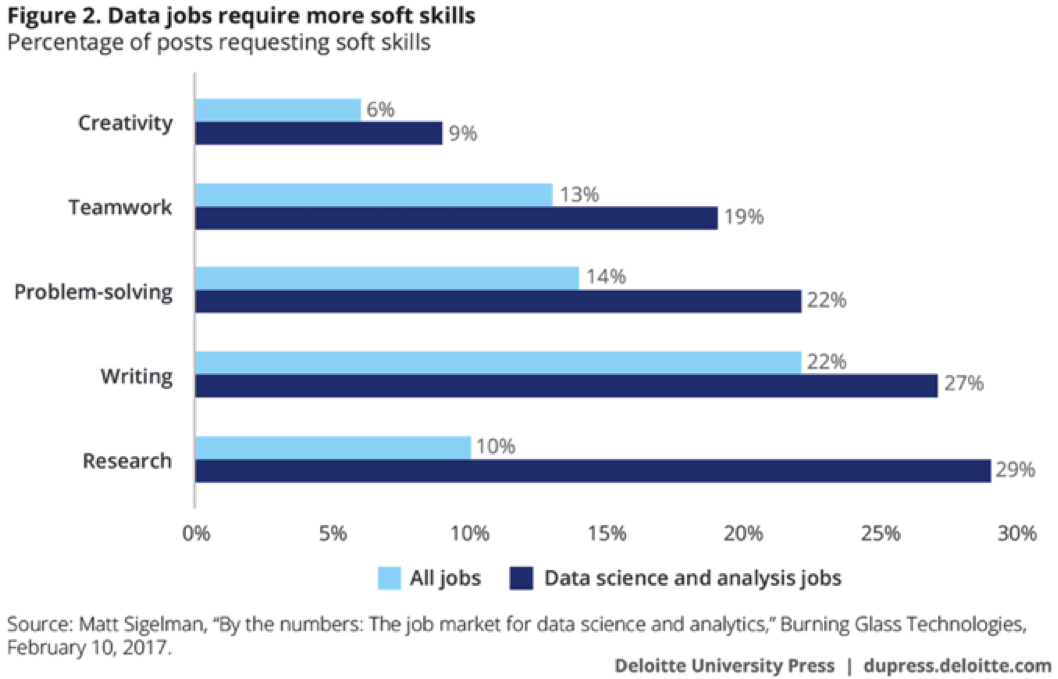
Technology Destroys Jobs, but Not Work
Just as many farm laborers moved to factory jobs 100 years ago, and line workers have retrained as robot techs more recently, many asset managers losing their jobs will move into other work that leverages their unique human assets more fully. For some the fact that the robots are coming will be traumatic, and for others it will be exciting.
To spare yourself of the trauma, regardless of what your job and industry is right now, you, too, need to begin paying attention to the trends that both automation and digital disruption are bringing to your industry and job category. Even people whose jobs aren’t lost often have new challenges dealing with new tools, customers and suppliers because of these trends. To remain competitive and employable you need to get on top of things. Get smart about where your job may be going, what it takes to stay current and invest in “upskilling” yourself to stay ahead of change instead of getting dragged along behind it.
The bottom line is that even when the analysts and economists tell you not to worry that people will be out of work, your future is about you, not “people”. Your responsibility is to do your job today and look out for your future tomorrow. I look forward to supporting you along the way.
FREE EBOOK
Coaching Tips:
How to Avoid the Most Common Career Mistakes
by Guest Author | Mar 1, 2025 | InPower Women Blog, Working Moms
Key Takeaways:
-
Working mother A relaxed “back‑to‑school meeting” with your kids a week or two before classes begin helps ease everyone into a new schedule—discussing bedtime shifts, lunch‑packing preferences, and new routines so the transition feels intentional, not surprising.
-
Tackle shopping early—retailers restock school supplies in July—so you can avoid the frantic last‑minute rush and even build fun little traditions into the prep, like grabbing ice cream together while picking up supplies.
-
When summer routines fade and school routines begin, your professional and parenting “hats” can collide—expect disruption and plan around it by easing into compartmentalization slowly.
-
Creating small rituals—like informal check‑ins with kids or joint plans for lunches or activities—can make a big difference in setting expectations and emotional readiness for both work and school rhythms.
-
Remember that even though many working moms manage full schedules, the back‑to‑school season brings unique stress and identity juggling—knowing this is normal can help you find compassion and patience with yourself.
By: Anna Williams
Last week in part 1 of our working mother advice mini-series, we talked about the challenge of juggling work, kids at home at the end of summer, and back-to-school prep all in the busy month of August. Here are a few more thoughts on getting ready for the new school year and enjoying the end of summer:
Preparing for the school year
What practical steps can we working mothers take to make the transition out of summer easier for us and our kids? With any changes in routine with my kids, things always go more smoothly when I’ve prepared them ahead of time. Jennifer Miller advises having an informal meeting with your kids a week or two before school starts. She uses this time to talk with her kids about how to successfully transition back into the school routine: “Sometimes it’s a discussion of how to alter the sleeping schedule to be ready to wake up at 6:00 AM. Other times it’s a discussion of grocery items they want for making their lunches.”
Just like with Christmas shopping, the sooner you can begin back-to-school shopping, the less hectic those last couple of weeks will be. (I’m hoping to take my own advice this year!) Retailers start stocking supplies in July, which makes it easy to get a head start. Creating some fun annual traditions, even simple ones like getting ice cream together, can be a good way to make memories while you’re getting things ready.
Here are a few suggestions from the moms I talked to in Part 1:
- If you can, plan your work so that you have a lighter load a week before school starts, and for the first week;
- Plan takeout or leftovers for the first day of school and let everyone know you’ll spend your evening filling out back-to-school forms; and
- Plan time the first few days when you pick up your kids from school to take them out to something special and listen to their stories about their days.
Embracing the new season
August won’t last forever. Just like with every other transition in childhood, this too shall pass. Your back-to-school survival mode strategy won’t be necessary forever, and it shouldn’t. Successfully easing into new schedules and routines can help us return to business as usual. The less stressed-out we feel during the back-to-school process, the more we’ll be setting ourselves up for successful work-life balance during the rest of the year and our new everyday routines.
Busy seasons like this can help working mothers grow into achieving the oftentimes elusive work-life balance. Dana Theus says, “I am clear with my work colleagues about my family obligations, but also how much I enjoy my family. I’ve made my joy in being a mom part of who I am and I take that to work with me. Similarly, everyone in my home life knows how important my career is to me and I don’t have to compartmentalize that anymore. This lowers a lot of stress.”
Embracing survival mode for a few weeks can pay dividends all year. As your kids head back to school, you can look forward to some breathing room in your schedule and time to catch up on your workload. And you’ll enjoy knowing that you took that extra time to soak in the last little bit of summer with your kids.
 Anna Williams is a freelance writer and mom of 4 living in the Charlotte area.
Worklife Reset for an Energized, Authentic Personal Brand
Workbook & Toolkit
Feeling like you need to hit the reset button on your job, career or business?
This uplifting 8-step process will help you find meaning, motivation and momentum in your career and work
by Guest Author | Feb 28, 2025 | Coaching Advice, Dear Dana (Workplace Advice)
Key Takeaways:
- Layoffs affect leaders too: While the focus is often on helping those who are laid off, team leaders also experience significant stress, including guilt and additional work. It’s important to recognize that leaders need support as well.
- Adopt a mindset of transition: Accept that layoffs are a part of the modern work landscape, and focus on helping employees transition to their next roles rather than feeling guilty or responsible for the outcome.
- Let go of guilt: It’s natural to feel survivor’s guilt or discomfort, but holding onto these negative emotions will harm both you and your team. Release guilt to focus on managing the situation more effectively.
- Separate personal stress from professional duties: Manage your own stress outside of the workplace, whether through friends, therapy, or a coach. Don’t burden your team with your personal challenges during tough times.
- Stress management is crucial for leaders: Avoid thinking that enduring excessive stress makes you a hero. Investing in self-care and stress management skills is vital to maintaining your health and effectiveness as a leader.
Dear Dana, I am uncomfortable even writing about this but my company is going through some rough times and I think we’re going to have to lay off some people. My team has grown a lot in the last couple of years and I worry that makes us one of the first groups to be cut. I’ve lived through layoffs before and it made me sick. Like physically ill. I am so worried that I’m already starting to feel sick again, and the leadership hasn’t even started talking about cutting people. What should I do? Any self care for leaders advice? – Sick in Cincinnati
Dear Trying-to-be-well,
Thanks for writing in with your question about self care for leaders. You’re bringing to light a truth about layoffs that is often overlooked. During a layoff there is a lot of focus on helping those who will be let go move on to their next career step, but we forget that the people left behind can be under at least as much stress. Not only may you have more work as certain jobs remain unfilled, but you may have guilt and discomfort related to how the layoff decisions were made, who was let go and who wasn’t. While such “survivor’s guilt” is common among the general workforce, team leaders often experience it too. Yet it’s even less comfortable for leaders to get support because they usually believe their role is to support everyone else and help the team focus on the work ahead.
And this is their job, but it doesn’t mean leaders don’t have the right to feel upset and to take steps to manage their own stress too. Here are some self care for leaders do’s and don’ts in preparing to handle layoffs with grace and a manageable amount of stress (it’s unrealistic to expect no stress, but you can absolutely reduce the amount you take on.)
DO: Accept That Every Job Is Temporary For Everyone And Your Job Is To Help People In Their Transition
Things aren’t like the old days where employees worked at the same place their whole career. Today the average job tenure in the private sector is under five years so it’s more likely that many on your team would be moving on in the near future anyway. A layoff is a forcing event that takes the choice out of their move, and this is unfortunate, but the reality of looking for a new job is going to be inevitable. Your best strategy is to adopt the mindset that a layoff will provide opportunity for people who take the attitude that the layoff is helping them onto their next gig. Your best contribution to their positive future will be to help them make the transition to the best of your ability.
A company once hired me to help their employees find jobs during a layoff. We planned ahead and gave people resources, workshops and opportunities to seek work “on the job” as the layoff date came closer. This approach worked great for my client, but it isn’t always possible for companies to provide so much notice and support. Still, the leadership mindset of trying to support peoples’ efforts to move on helped my client retain some good talent in other groups and created good will.
DO: Let Go Of Your Own Guilt
It’s totally normal to feel some guilt if people are being let go through no fault of their own. Whether it’s survivor’s guilt, discomfort for being the one that must deliver the bad news or some combination of the two, you’ll do them more good in their transition and keep yourself in better shape, if you let go of as much guilt as you can.
You can vent and share your feelings with others outside the company (see below) to help you, but your best chance of really releasing the negative guilt feelings is to detrigger them completely. Detriggering is a great skill to help you manage all kinds of stress anyway so if layoffs are your forcing event, then use this as the opportunity to learn to transform negative emotional energy into a positive force in your life.
DON’T Make This Situation About You With The People You Lead
Yes, you have a right to do things to manage your own stress and engage in self-care as a leader, but you need to do so in service of yourself and the people you lead. Get yourself some good friends, a coach or a therapist who are outside the company to talk to about your stress so you don’t pile it on to those in your workplace.
It’s not about your stress or theirs, it’s about both. Just be careful to manage your stress in ways that leaves you clear and focused when you’re at work. This makes you a better leader and it burnishes your personal brand for those who see how you act under pressure, which can help you in your own career ambitions.
DON’T Think That Taking On So Much Stress Makes You A Hero
The thing that concerns me most about your note is that you got so stressed last time you experienced layoffs that you got physically ill. this tells me you’d benefit from learning good stress management techniques whether you are headed for a layoff again, or not.
Self-care for leaders is a critical skill in its own right, regardless of the circumstances. Stress eats up a lot of energy that you would otherwise spend being an effective leader and being a healthy person. I strongly suggest that you invest in shoring up your own stress management skills before the possibility of layoffs becomes real. This will help you generally and position you well in case layoffs are inevitable.
Good luck and be well!
Dana Theus
Executive Coach
FREE EBOOK
Coaching Tips:
How to Avoid the Most Common Career Mistakes
Updated from 2017 – sadly layoffs are a perpetual issue!